Lining Pro Opinion
Cast Iron Sewer Repair in Florida
Cast Iron Sewer Repair in FL
Florida has a cast iron sewer problem because thousands of homes, condos, apartments, hotels, restaurants, schools, and commercial buildings were built with cast iron drain and sewer piping under slabs, inside walls, and below finished floors. The honest answer is not that every pipe needs a liner, every pipe needs excavation, or every pipe can be saved. The honest answer is that cast iron sewer repair in Florida has to begin with inspection, cleaning, condition grading, access planning, and a repair method that fits the actual pipe condition.
Lining Pro opinion: Florida cast iron sewer repair should never be sold as a one-size-fits-all product. A good contractor proves the pipe condition first, explains the repair limits clearly, and gives the owner a repair path that makes technical sense.
Why Florida Cast Iron Sewer Lines Are Such a Serious Issue
Cast iron pipe was a strong and common plumbing material for decades. It was used because it was rigid, quiet, fire resistant, and durable when installed correctly. The problem is that cast iron does not stay new forever. Inside a drain or sewer line, it is exposed to wastewater, gases, moisture, acidic waste, detergents, food waste, biological activity, and long periods of wet and dry cycling.
In Florida, the issue is magnified by slab construction, high groundwater in many areas, sandy soils, mature landscaping, heavy rain events, older housing stock, and a large number of properties built during the decades when cast iron was widely used. Many owners do not discover the problem until backups, slow drains, sewer odors, recurring clogs, or insurance-related plumbing questions force a closer look.
It is important to be precise. Florida itself does not magically destroy cast iron. The pipe fails because of age, corrosion, installation conditions, soil movement, repeated cleaning damage, waste chemistry, structural wear, root activity, and long-term service conditions. Florida simply has a large concentration of buildings where those conditions now matter.
What Actually Happens Inside an Aging Cast Iron Sewer Pipe
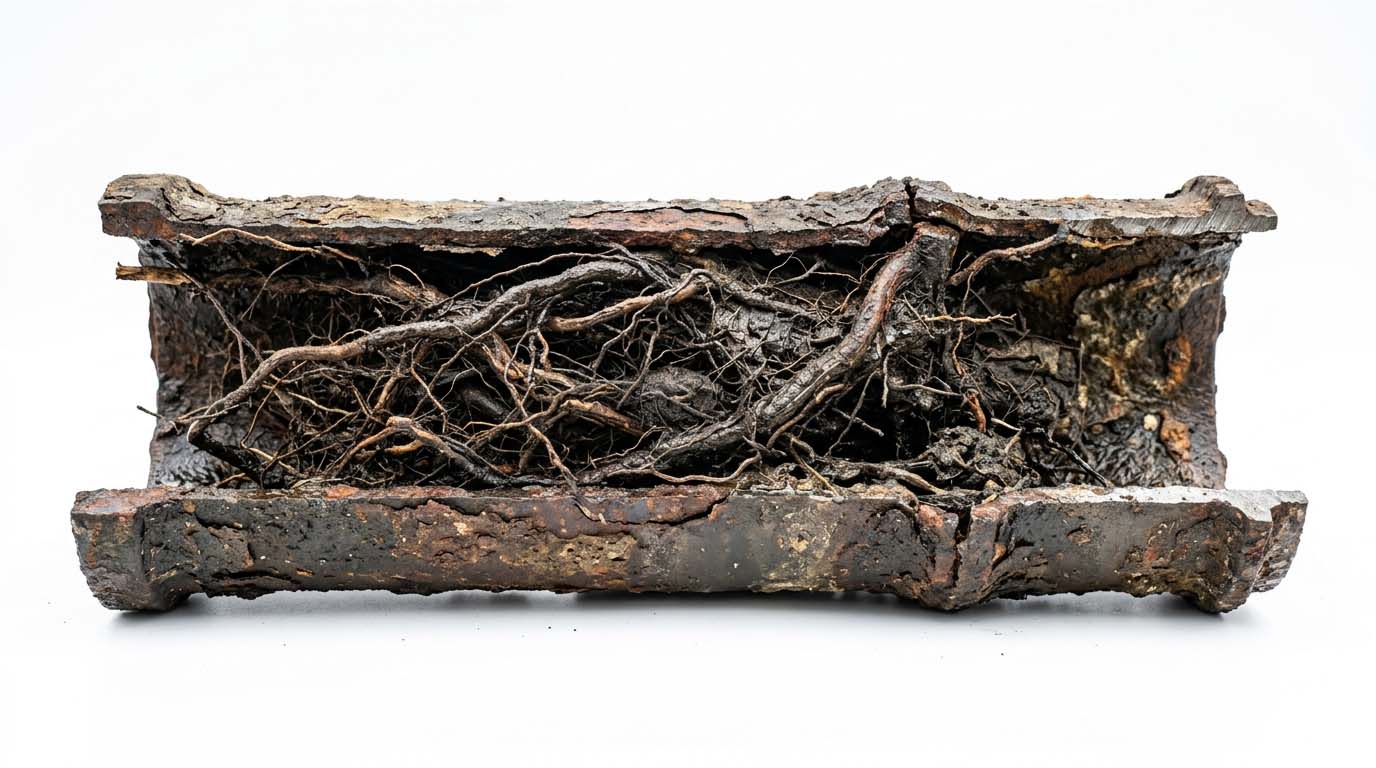
Most property owners picture a sewer line as a smooth open tube. Aging cast iron often looks very different. The inside of the pipe can become rough, swollen with scale, pitted, flaked, cracked, offset, or partially obstructed. The pipe may still be in the ground, but the hydraulic performance and structural condition can be poor.
Tuberculation and scale
Cast iron can develop rough internal buildup that catches paper, grease, wipes, food waste, and solids. This reduces flow and creates recurring clog points.
Channel rot
The bottom of the pipe, also called the invert, can thin and deteriorate from constant wastewater flow. In severe cases, the bottom of the pipe may be missing or heavily eroded.
Pitting and wall loss
Corrosion can remove pipe wall thickness. A pipe may look round on camera but still be structurally weak if the wall has lost too much material.
Cracks and fractures
Cast iron can crack from age, settlement, loading, poor bedding, aggressive cleaning, root pressure, or long-term structural stress.
Joint problems
Older joints can separate, offset, leak, or allow root intrusion. A good inspection records where these defects occur, not just that they exist.
Repeated backups
Recurring stoppages usually mean the line has a condition problem, not just a cleaning problem. Jetting may restore temporary flow, but it does not rebuild damaged pipe.
Florida Slab Homes Make the Problem More Expensive
Many Florida homes and buildings have cast iron drain lines below concrete slabs. That changes the repair conversation. A simple pipe replacement can involve saw cutting floors, removing tile, breaking concrete, trenching through living space, protecting cabinets and finishes, controlling dust, relocating occupants, and restoring the property afterward.
This is why trenchless sewer repair became so important in Florida. The appeal is not that trenchless work is magic. The appeal is that many owners want to avoid unnecessary demolition when the existing pipe can be cleaned, prepared, and structurally rehabilitated from access points.
At the same time, trenchless work has limits. If a pipe is collapsed, badly deformed, backpitched, missing too much structure, holding standing water because of slope failure, or inaccessible in a way that prevents proper preparation, excavation or replacement may be the correct answer.
The First Truth: Camera Inspection Alone Is Not Enough
A sewer camera is essential, but the camera is not the repair plan by itself. A video inspection should be interpreted by someone who understands pipe materials, slope, access, defects, cleaning requirements, and rehabilitation limits. A rushed video with no footage counter, no direction, no defect notes, and no explanation is not enough for a major repair decision.
The best inspections document where the line starts, where it ends, what direction the camera is moving, pipe size, pipe material, depth where available, footage distance, observed defects, blockage points, water holding, root intrusion, cracks, offsets, and whether the line can be properly cleaned for repair.
| Inspection item | Why it matters | Repair impact |
|---|---|---|
| Pipe material and transitions | Older systems may transition from cast iron to clay, PVC, Orangeburg, concrete, or other materials. | Different materials may require different cleaning tools and repair methods. |
| Slope and standing water | Water holding can indicate belly, settlement, blockage, or poor grade. | Lining can restore the pipe wall, but it does not correct major slope failure. |
| Wall loss and cracks | Corrosion and fractures determine whether the host pipe can be cleaned and lined. | Severe defects may require point repair, replacement, or a different rehabilitation plan. |
| Cleanouts and access points | Trenchless work depends on safe, practical access for cleaning, measuring, and installation. | Poor access can increase cost or require access excavation. |
| Root intrusion | Roots usually enter through cracks, joints, defects, or failed transitions. | Roots must be removed, and the entry point must be addressed or the problem returns. |
| Scale and obstruction level | Heavy scale reduces the pipe opening and hides defects. | Cleaning and descaling are often required before final repair recommendations are made. |
The Second Truth: Descaling Is Preparation, Not the Final Repair
Cast iron descaling is often necessary before trenchless lining or accurate final inspection. The goal is to remove internal rust scale, hardened buildup, sludge, and rough obstructions so the pipe can be evaluated and, when appropriate, lined. Descaling can improve flow, but it should not be confused with structural rehabilitation.
If a cast iron pipe is rough but structurally sound enough, descaling may restore useful function and prepare the line for a liner. If the pipe is already thin, cracked, broken, or missing large sections, aggressive cleaning can expose the true condition. That is not the cleaning contractor causing the original failure. It is the cleaning process revealing damage that was already present.
This is why honest contractors explain risk before they clean heavily deteriorated cast iron. The owner should understand that the line may look worse after cleaning because hidden defects are no longer covered by scale and debris.
Important: A pipe that looks open after cleaning is not automatically repaired. Flow improvement and structural restoration are different outcomes.
Common Repair Options for Cast Iron Sewer Lines in Florida
There are several legitimate ways to repair cast iron sewer lines in Florida. The right method depends on the pipe condition, location, access, budget, property use, and tolerance for disruption. A good recommendation should explain why one method is preferred and what conditions would make another method better.
| Method | Best use | Limits |
|---|---|---|
| Hydro jetting | Clearing soft blockages, grease, sludge, and debris when the pipe can tolerate water pressure. | Does not fix corrosion, cracks, wall loss, poor slope, or structural failure. |
| Mechanical descaling | Removing internal cast iron scale and buildup before final inspection or lining. | Can reveal hidden defects and may not be appropriate for severely weakened pipe. |
| CIPP lining | Creating a new cured pipe lining inside a prepared host pipe with suitable access and geometry. | Requires cleaning, measurement, proper wet out or liner preparation, curing control, and verification. |
| Sectional point repair | Repairing a localized defect, crack, joint, or short damaged section. | May not solve widespread pipe deterioration or multiple defects throughout the system. |
| Pipe bursting | Replacing certain buried lines by breaking the old pipe and pulling in new pipe. | Not suitable for every underslab, access, depth, bend, or utility conflict condition. |
| Excavation and replacement | Collapsed pipe, severe slope failure, inaccessible sections, or pipe that cannot be properly cleaned or lined. | Can be disruptive, especially under slabs, finished floors, landscaping, driveways, or commercial spaces. |
When Cast Iron Lining Makes Sense
Cured-in-place pipe lining can be a strong solution when the existing cast iron line can be cleaned, measured, accessed, and used as a host for a new liner. The liner is installed inside the existing pipe and cured to form a new internal pipe wall. For Florida properties, this can reduce demolition and avoid opening long sections of slab or flooring.
Lining may make sense when the pipe is rough, corroded, cracked, leaking at joints, affected by root intrusion, or repeatedly clogging, but still has enough geometry and continuity to receive a liner. The contractor should verify diameter, length, access, bends, tie-ins, branch lines, cleanout locations, and whether reinstatement of openings is required.
A liner is only as good as the inspection, cleaning, preparation, installation, cure, and final verification. Poorly cleaned pipe, bad measurements, uncontrolled curing, improper resin selection, blocked branch openings, and weak documentation can turn a good technology into a bad job.
When Cast Iron Lining Does Not Make Sense
Lining is not the answer for every cast iron line. Some pipes should be excavated, replaced, rerouted, or repaired with a different method. A contractor should be willing to say no to lining when the conditions do not support it.
Collapse
If the pipe has collapsed or the camera cannot pass because the structure has failed, lining may not be possible without excavation or spot repair.
Severe belly
A liner follows the existing pipe path. It does not magically create proper slope where the line has settled badly.
Bad access
If the line cannot be cleaned, measured, or reached correctly, the project may require new access or another repair plan.
Missing pipe sections
Major voids, broken sections, and lost invert may need structural evaluation before a liner is recommended.
Improper tie-ins
Branch lines, sanitary tees, wyes, and transitions must be understood before lining so openings are not blocked or missed.
Unknown layout
If the piping layout is not known, mapping and additional inspection may be needed before pricing a repair.
A Practical Condition View for Florida Cast Iron
Not every sewer line needs the same level of response. The table below is not a formal engineering grade, but it reflects how many technical contractors think through cast iron condition in the field. It helps owners understand why one property may need cleaning and monitoring while another needs structural rehabilitation or replacement.
| Condition level | Typical findings | Likely next step |
|---|---|---|
| Minor wear | Light scale, normal aging, no major cracks, no recurring blockage history. | Document condition, clean if needed, monitor over time. |
| Moderate buildup | Internal roughness, partial buildup, early flow restriction, isolated minor defects. | Clean, descale where appropriate, reinspect, then decide whether lining is justified. |
| Recurring service problem | Repeated backups, heavy scale, roots, cracks, joint defects, or poor flow. | Prepare a repair plan. CIPP lining, point repair, or replacement may be considered. |
| Structural concern | Wall loss, fractures, missing invert, significant offsets, active infiltration, or multiple defects. | Detailed repair design. May require spot excavation, lining after preparation, or replacement. |
| Failure condition | Collapse, severe deformation, blocked camera access, major slope failure, or unsafe host pipe condition. | Excavation, replacement, reroute, or engineered repair approach may be required. |
The Florida Insurance Reality
Many Florida property owners first learn about cast iron sewer problems during an insurance discussion, home sale, inspection, renovation, or claim. Some policies, carriers, and claim decisions treat plumbing failures differently depending on the cause, timing, damage, exclusions, maintenance history, and documentation. Lining Pro is not an insurance company and this article is not insurance advice.
From a technical standpoint, documentation matters. A clear inspection report, dated video, photos, repair proposal, cleaning notes, final inspection, and post-repair video can help an owner understand what was repaired and why. Whether that documentation affects coverage, underwriting, or claims is a separate issue that should be reviewed with the appropriate insurance professional.
Why Repeated Drain Cleaning Is a Warning Sign
A single clog does not prove a failed sewer line. A recurring clog in the same cast iron line deserves more attention. If the line keeps backing up after snaking or jetting, the owner should ask what defect is causing the blockage to return.
Repeated mechanical cleaning can also be hard on older pipe when the line is already weak. Cable machines, chain tools, cutters, and high-pressure water all have valid uses, but the operator should understand the condition of the pipe and the purpose of the cleaning. Cleaning should support diagnosis and repair, not become an endless cycle that delays the real solution.
What a Good Florida Cast Iron Sewer Contractor Should Explain
The contractor should be able to explain the condition of the pipe in normal language and technical language. The owner should not be left with vague statements like the pipe is bad or the line needs to be replaced without supporting evidence.
Show the actual pipe condition
The contractor should provide camera findings that identify the material, direction, footage, defects, access points, and visible restrictions.
Explain how the pipe will be prepared
Cast iron often requires careful cleaning or descaling before final repair. The method should match the pipe condition and risk level.
Defend the method, not just the price
The proposal should explain why lining, replacement, bursting, point repair, or continued maintenance is being recommended.
State what the repair will not fix
A truthful proposal should identify limitations such as slope problems, access constraints, branch lines, excluded areas, or unrepaired sections.
Provide a final inspection record
After repair, the owner should receive documentation showing the completed work and confirming that the line is open and functional.
Residential, Commercial, and Multi-Unit Properties Are Different
A single-family Florida home with one failed bathroom group is a different project than a condominium stack, hotel kitchen line, restaurant grease-affected drain, apartment building main, or commercial facility with active occupancy. The same cast iron material may be involved, but the access, scheduling, risk, and repair strategy can be completely different.
Commercial and multi-unit properties also require stronger communication. Shut downs, tenant access, noise, odor control, water use restrictions, floor protection, after-hours work, health concerns, and documentation all matter. The technical repair is only one part of the project. Planning the work around occupied property is often just as important.
Questions Florida Owners Should Ask Before Approving Cast Iron Sewer Repair
- What pipe material did you verify? Many properties have mixed materials, and the repair method may change by section.
- Where exactly is the defective section? The contractor should identify location, footage, and access points.
- Is the pipe structurally suitable for lining? If lining is recommended, the contractor should explain why the host pipe can accept a liner.
- Is there standing water or a belly? If slope is the main problem, a liner may not solve the underlying grade issue.
- How will the pipe be cleaned? Cast iron preparation matters. Poor cleaning can compromise the repair.
- Are branch lines or tie-ins involved? Openings must be identified and handled correctly.
- What areas are excluded? A proposal should be clear about what is repaired and what remains unchanged.
- What documentation will I receive? Inspection video, photos, report notes, and post-repair verification are valuable.
- What happens if cleaning reveals a worse defect? Older cast iron can hide damage under scale. The contingency plan should be discussed before work starts.
The Lining Pro Position
Florida cast iron sewer repair should be sold with more honesty than fear. Yes, many cast iron systems are aging out. Yes, slab repair can be expensive. Yes, trenchless lining can be a strong solution when the pipe is a good candidate. But no, every cast iron pipe is not automatically an emergency, and no, every cast iron pipe can not automatically be lined.
The right approach is technical. Inspect the line. Clean it when appropriate. Identify the defects. Understand the access. Choose the repair method that fits the pipe. Verify the work. Explain the limits. That is the difference between a sales pitch and a responsible repair plan.
Find Cast Iron Sewer Repair Contractors in Florida
Lining Pro helps property owners understand trenchless sewer repair options and connect with contractors who work on sewer inspection, descaling, pipe lining, and related repair methods.
Start with education, then compare the repair approach. Read more about how trenchless sewer repair works or browse sewer repair contractors.