Lining Pro.com Technical Guide
What Is a Sewer Crawler Robot?
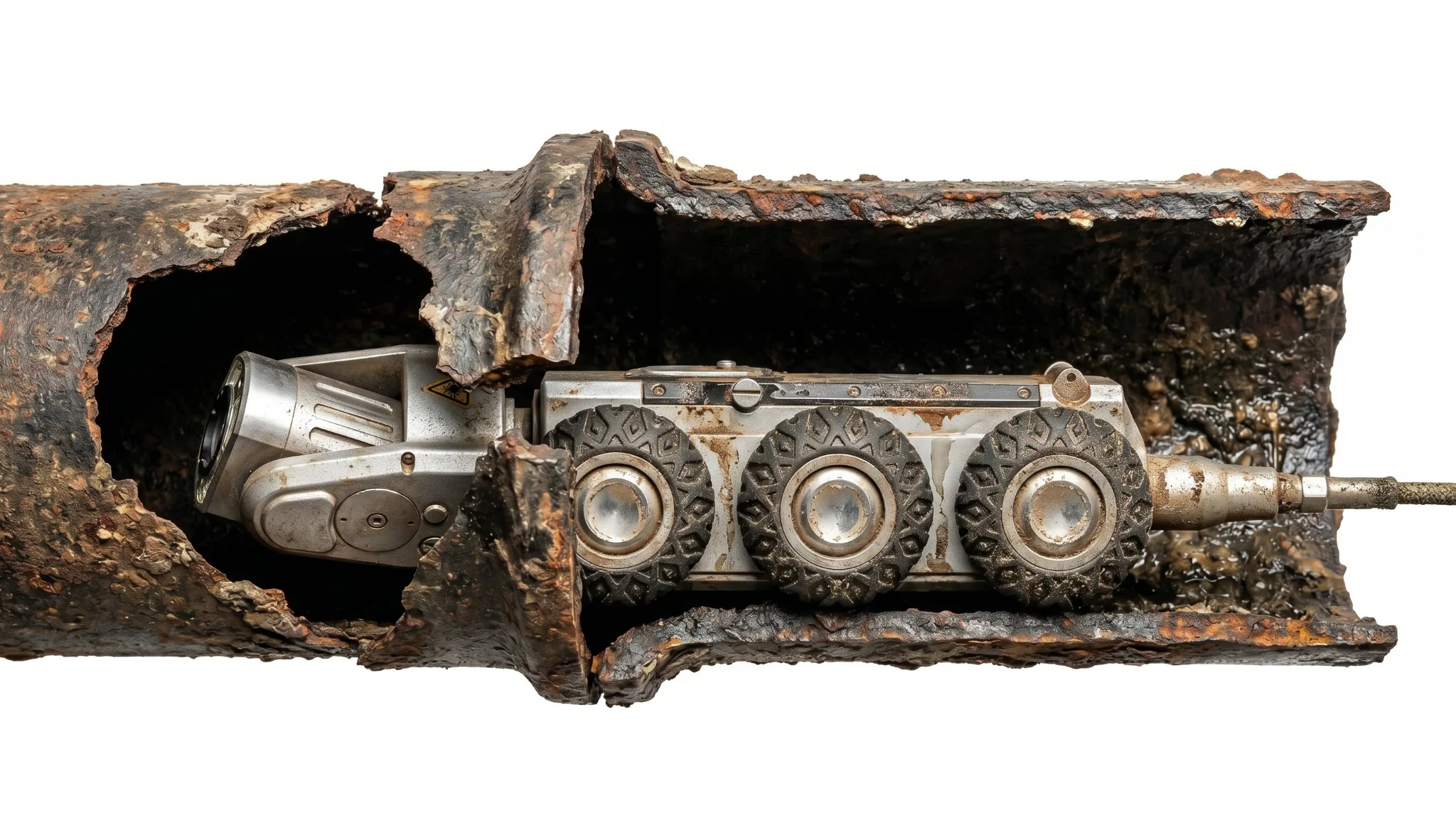
A sewer crawler is a remotely operated robotic inspection platform designed to travel through larger sewer, storm, industrial, and underground pipeline systems while transmitting live video, condition data, measurements, and defect observations back to an operator above ground. In modern sewer infrastructure, crawlers are one of the most important diagnostic tools for understanding underground pipe condition without excavation.
From the Lining Pro.com perspective, sewer crawlers are not just cameras. They are mobile pipeline assessment systems capable of performing advanced condition inspections, defect coding, dimensional analysis, laser profiling, sonar integration, lateral launch, obstruction assessment, rehabilitation verification, and municipal-grade asset documentation. They are critical in trenchless rehabilitation, municipal infrastructure management, commercial pipe condition assessment, and large-diameter sewer diagnostics.
What a Sewer Crawler Actually Is
A sewer crawler is typically a motorized wheeled or tracked robotic chassis connected to a control truck, van, trailer, or portable control unit by a tether cable. The crawler carries a high-definition camera system, lighting, sensors, and often interchangeable modules that allow operators to inspect sewer lines ranging from municipal mains to industrial process lines.
Unlike a push camera, which is physically pushed through smaller lines, a crawler is self-propelled and designed for longer distances, larger diameters, more complex navigation, and higher-grade condition analysis. Operators control movement, camera pan, tilt, zoom, focus, lighting, and data capture from the surface while recording detailed inspection reports.
Plain English: a sewer crawler is essentially a robotic underground inspection vehicle built for serious sewer diagnostics.
Core Functions of a Sewer Crawler
CCTV Inspection
Provides live video inspection of sewer lines for structural, operational, and maintenance analysis.
Defect Documentation
Supports NASSCO PACPTM, MACPTM, and LACPTM coding for standardized infrastructure condition scoring.
Laser Profiling
Measures pipe deformation, ovality, diameter changes, and cross-sectional loss.
Sonar Integration
Can assess submerged sections or water-filled pipe where optical cameras lose visibility.
Lateral Launch
Some systems can deploy secondary cameras into service laterals from the mainline.
Rehabilitation Verification
Used before and after trenchless lining, repairs, grouting, or rehabilitation projects.
What Sewer Crawlers Can Detect
Sewer crawlers are designed to identify a wide range of defects and operational conditions. Depending on the system and attachments, they can evaluate pipe integrity, infiltration, root intrusion, obstructions, grease accumulation, corrosion, collapsed sections, failed liners, offsets, service connections, joint failures, and more.
| Condition Type | Examples | Why It Matters |
|---|---|---|
| Structural Defects | Cracks, fractures, breaks, collapse, deformation, wall loss | Helps determine whether lining, point repair, bursting, or replacement may be needed. |
| Operations & Maintenance Defects | Roots, grease, debris, infiltration, sediment, obstructions | Supports cleaning, jetting, chain knocking, root cutting, or maintenance planning. |
| Rehabilitation Defects | Failed liners, wrinkles, offsets, poor reinstatements | Critical for verifying contractor workmanship and long-term liner performance. |
| Hydraulic Conditions | Standing water, surcharge, bellies, grade issues | May influence repair feasibility and long-term performance. |
Advanced Technologies Commonly Integrated Into Sewer Crawlers
Modern crawler systems are often far more sophisticated than simple video inspection rigs. Municipal and commercial-grade systems may integrate multiple technologies to improve diagnostic precision.
Common Advanced Features
- Pan and tilt HD cameras
- Optical zoom
- Laser profiling
- Sonar scanning
- Digital footage capture
- NASSCO coding software
- GPS and GIS integration
- Lateral launch systems
Operational Benefits
- Asset management planning
- Rehabilitation prioritization
- Pre-lining verification
- Post-repair QA/QC
- Municipal budgeting
- Insurance documentation
- Engineering review
- Cross-bore prevention support
How Sewer Crawlers Are Used in Trenchless Rehabilitation
Assess Pipe Condition Before Repair
The crawler identifies defects, service connections, diameter changes, infiltration points, and repair feasibility before lining or excavation decisions are made.
Confirm Pipe Preparation
After hydro jetting, chain knocking, or mechanical cleaning, the crawler verifies whether the host pipe is properly prepared for rehabilitation.
Guide Repair Strategy
Inspection findings help determine whether the pipe is a candidate for CIPP lining, UV-CIPP, point repair, pipe bursting, sectional replacement, or full replacement.
Verify Completed Repairs
After trenchless or conventional repairs, crawlers verify liner integrity, reinstatements, defects, and final project quality.
Support Asset Management
Municipalities and commercial operators may reinspect over time to track deterioration and prioritize future investments.
Common Sewer Crawler Applications
| Application | Purpose | Typical User |
|---|---|---|
| Municipal Sewer Main Inspection | Large-scale infrastructure condition assessment | Cities, utilities, engineering firms |
| Commercial Sewer Diagnostics | Operational and structural assessment | Commercial contractors, facility managers |
| Pre-Lining Assessment | Determine trenchless eligibility | Pipe lining contractors |
| Post-Lining Verification | QA/QC documentation | Rehabilitation contractors, municipalities |
| Cross Bore Prevention | Utility conflict detection | Gas utilities, municipalities |
| Industrial Process Lines | Condition and blockage diagnostics | Industrial operators |
Major Sewer Crawler Manufacturers
Several major manufacturers produce advanced crawler inspection platforms used throughout municipal and commercial markets. Brand names and product lines should always be evaluated independently based on project requirements, support availability, compatibility, and operator training.
Examples may include systems from manufacturers such as Envirosight, LLC (including the ROVVER X® platform), Rausch Electronics USA, LLC, Aries Industries, Inc., iPEK International GmbH, IBAK Helmut Hunger GmbH & Co. KG, and others. Registered trademarks, service marks, and product branding remain the property of their respective owners.
Legal note: Mention of any manufacturer, product, or trademark is for informational and editorial reference only and should not be interpreted as endorsement, certification, or superiority claim.
Limitations of Sewer Crawlers
While crawlers are highly capable, they are not universal solutions for every inspection challenge. Heavy debris, severe collapse, inaccessible laterals, full submergence without sonar, extreme bends, or very small diameter lines may require different technologies such as push cameras, sonar platforms, lateral launch systems, or excavation.
Operator skill also matters significantly. A crawler system is only as effective as the technician’s understanding of pipe conditions, NASSCO coding, equipment operation, and data interpretation.
Not Ideal for Small Laterals
Push cameras may be more practical for very small diameter residential branch lines.
Requires Skilled Operators
Proper coding, interpretation, and equipment use require training.
Water Levels Matter
High flow or submerged lines may require sonar or specialty systems.
Access Constraints
Pipe entry points and diameter determine whether crawler deployment is practical.
Complex Repairs Still Need Judgment
The crawler provides data, but repair planning still requires engineering and contractor expertise.
Capital Cost
Municipal-grade crawler systems can represent major equipment investments.
What Property Owners, Engineers, and Municipal Buyers Should Ask
| Question | Why It Matters |
|---|---|
| Is the inspection NASSCO PACPTM coded? | Standardized coding improves repair planning and infrastructure analysis. |
| Will laser or sonar profiling be used? | Advanced diagnostics may reveal deformation or submerged defects. |
| Can the system inspect laterals? | Lateral launch capability may improve service connection visibility. |
| What deliverables are provided? | Video, reports, condition scores, and GIS integration all affect long-term value. |
| Is the crawler being used pre- or post-rehabilitation? | Inspection objectives affect equipment configuration and reporting requirements. |
The Bottom Line
A sewer crawler is one of the most advanced diagnostic tools used in underground pipeline assessment. It combines robotics, CCTV, condition scoring, profiling, and asset documentation to help contractors, engineers, municipalities, and facility operators understand what is happening inside critical underground infrastructure.
In modern trenchless sewer repair, crawlers are often foundational. They help determine whether a pipe should be cleaned, lined, repaired, burst, replaced, or monitored. They improve project planning, quality assurance, budgeting, and long-term infrastructure management.
Lining Pro.com helps users connect with contractors and infrastructure specialists working in sewer inspection, crawler diagnostics, trenchless rehabilitation, CIPP lining, cast iron restoration, hydro jetting, and structural pipe renewal. Customers should always review credentials, inspection footage, coding methodology, and contractor qualifications before making repair or purchasing decisions.
Browse Sewer Inspection and Trenchless Contractors
Use Lining Pro.com to browse contractors who specialize in sewer inspection, crawler diagnostics, trenchless sewer repair, pipe lining, hydro jetting, and infrastructure rehabilitation.
Browse Contractors