Lining Pro.com Technical Guide
Benefits of Trenchless Sewer Repair
Trenchless sewer repair has changed the way property owners think about damaged underground pipe. Instead of automatically cutting open floors, driveways, landscaping, parking lots, sidewalks, or roadways, trenchless methods can often restore the sewer line from limited access points with far less surface disruption.
From the Lining Pro.com perspective, the real benefit is not simply that trenchless repair is cleaner or more convenient. The real benefit is that a properly planned trenchless project can combine inspection, cleaning, structural rehabilitation, corrosion resistance, root control, and long-term sewer performance into one controlled repair process.
Why Trenchless Sewer Repair Matters
Traditional sewer replacement usually means excavation. That can include digging through a yard, removing concrete, cutting through a slab, opening a roadway, disturbing landscaping, or shutting down part of a commercial property. In some cases, open-cut replacement is still necessary. But in many situations, the pipe can be repaired or renewed without exposing the entire line.
Trenchless sewer repair is built around that idea. The contractor uses inspection equipment to understand the pipe condition, prepares the host pipe, and then applies a rehabilitation method such as cured-in-place pipe lining, spot repair, pipe bursting, or another trenchless solution. The goal is to solve the pipe problem while limiting unnecessary damage above the pipe.
Plain English: trenchless sewer repair is about fixing the pipe without tearing up everything above it when a less destructive method is realistic.
The Main Benefits of Trenchless Sewer Repair
Less Property Damage
Trenchless methods can reduce the need to remove driveways, flooring, landscaping, patios, sidewalks, parking lots, and other finished surfaces.
Reduced Downtime
For homes, restaurants, apartments, offices, and facilities, less excavation can mean less interruption to daily use and business operations.
Structural Renewal
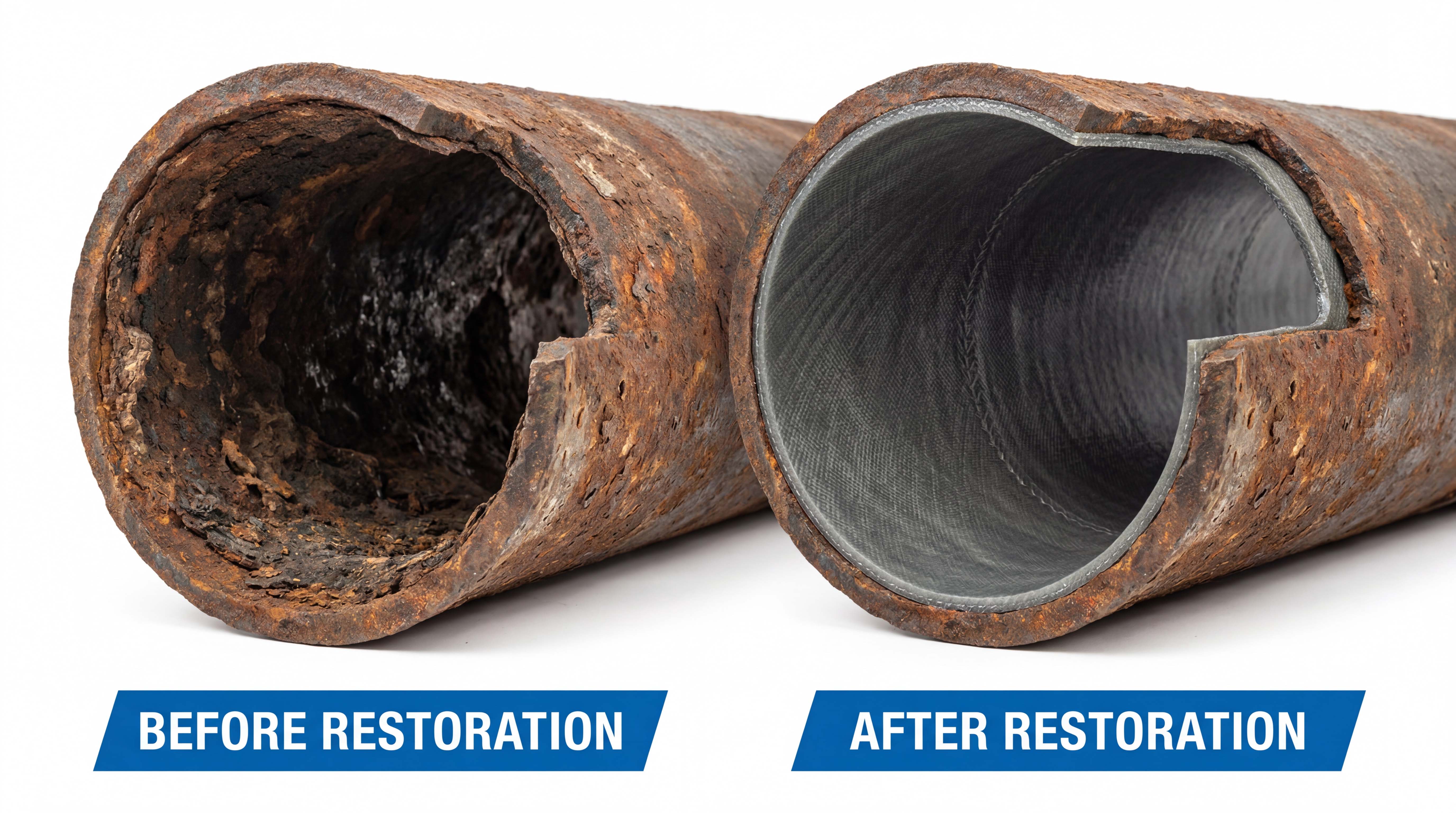
Methods like CIPP lining can create a new internal pipe wall inside the existing pipe, helping restore function without full open-cut replacement.
Root Intrusion Control
A properly installed liner can cover cracks and joints where roots commonly enter older sewer systems.
Corrosion Resistance
Trenchless lining can separate wastewater from the deteriorated host pipe, which is especially important for cast iron, clay, concrete, and aging sewer materials.
Better Long-Term Planning
Because trenchless work usually starts with camera inspection, the repair decision is based on the actual condition of the pipe instead of guesswork.
Benefit 1: Less Excavation
The most obvious benefit of trenchless sewer repair is reduced excavation. In many projects, the contractor can access the sewer line from an existing cleanout, manhole, access pit, or limited excavation point. That can make a major difference when the damaged pipe runs under a driveway, slab, building floor, landscaped area, pool deck, sidewalk, roadway, or commercial space.
Less excavation does not mean no work. The pipe still has to be inspected, cleaned, prepared, repaired, and verified. But avoiding a full trench can reduce restoration costs, cleanup time, noise, dust, traffic disruption, and property damage.
| Traditional Replacement | Trenchless Repair | Why It Matters |
|---|---|---|
| Often requires exposing the full pipe path. | Often works through access points or limited excavation. | Less surface disruption can reduce restoration work. |
| May involve cutting concrete, flooring, or hardscape. | May preserve more finished surfaces. | Useful for slabs, driveways, patios, and commercial floors. |
| Can interrupt property use for longer periods. | May reduce downtime depending on project conditions. | Important for businesses, tenants, and occupied homes. |
| Restoration can become a major part of the total cost. | Restoration needs may be reduced. | The plumbing repair is only one part of the real-world project cost. |
Benefit 2: Faster Project Completion in Many Situations
Trenchless sewer repair can often be completed faster than full excavation and replacement, especially when the pipe is accessible and lineable. A traditional replacement may require locating the pipe, digging, removing surfaces, replacing pipe, backfilling, compacting, repouring concrete, restoring landscaping, and cleaning up the work area. Trenchless work can sometimes compress that process because the contractor is rehabilitating the pipe internally.
Speed should not be confused with rushing. The contractor still has to perform the work correctly. A fast trenchless job that skips cleaning, prep, cure control, or final inspection is not a benefit. The advantage comes from using the right equipment and method to reduce unnecessary demolition while still performing a proper repair.
Important: trenchless repair is not automatically faster in every case. Collapsed pipe, poor access, heavy scale, standing water, severe offsets, or failed slope can all change the timeline.
Benefit 3: Structural Pipe Renewal
One of the biggest technical advantages of trenchless sewer repair is that certain methods do more than clear a blockage. Cured-in-place pipe lining, commonly called CIPP, creates a new pipe wall inside the existing sewer line. A flexible liner is saturated with resin, installed into the host pipe, expanded, and cured until it hardens.
When properly installed, the finished liner can bridge cracks, cover joints, reduce root entry points, improve the internal flow surface, and separate wastewater from the deteriorated host pipe. This is why trenchless lining is commonly considered for cracked clay, corroded cast iron, aging concrete, Orangeburg pipe, root-damaged laterals, and leaking sewer joints.
The Pipe Is Reviewed by Camera
The contractor identifies pipe material, defects, access points, diameter, offsets, cracks, corrosion, roots, and whether the pipe can accept a liner.
The Host Pipe Is Cleaned
Hydro jetting, root removal, mechanical descaling, or cutting tools may be used to remove debris and prepare the pipe wall before lining.
The Liner Is Placed Inside the Pipe
The liner is pulled or inverted into position, then expanded so it conforms to the inside of the existing pipe.
The Liner Becomes the New Pipe Wall
Ambient cure, steam, hot water, or UV light may be used depending on the liner system and project requirements.
The Finished Repair Is Camera Inspected
Final video helps confirm the liner condition, flow path, branch openings, and finished repair quality.
Benefit 4: Reduced Restoration Costs
The cost of sewer replacement is not only the plumbing work. It can also include concrete repair, flooring repair, landscaping, pavement restoration, traffic control, tenant disruption, lost business, site cleanup, permitting, and follow-up repairs. In many projects, the restoration around the pipe becomes a major cost driver.
Trenchless sewer repair can reduce those secondary costs because the work is less invasive. This is especially important for properties where the sewer line runs beneath valuable or difficult-to-replace surfaces.
| Surface or Property Feature | Why Trenchless Can Help |
|---|---|
| Driveways | May reduce the need to saw cut and repour large sections of concrete or pavers. |
| Slab Foundations | May reduce interior trenching when the pipe is accessible and lineable. |
| Commercial Floors | Can help limit business disruption, tenant impact, and floor restoration. |
| Landscaping | Can reduce damage to trees, irrigation, sod, hardscape, and planted areas. |
| Roadways and Parking Lots | Can limit pavement removal, traffic control, and surface reconstruction. |
Benefit 5: Better Control of Roots, Cracks, and Leaking Joints
Roots usually enter sewer lines through openings. Those openings may be clay joints, cracked cast iron, separated pipe sections, broken fittings, or gaps caused by soil movement. Cleaning removes the roots, but if the entry point remains open, the roots can return.
Trenchless lining can cover many of those entry points by creating a continuous internal pipe wall. This does not mean every root problem is automatically solved forever, and it does not mean every pipe should be lined. But when the pipe is a good candidate, lining can address the defect that allowed the roots into the system in the first place.
Cracked Pipe
The liner can cover cracks and create a continuous internal surface through the damaged area.
Failed Joints
Lining can reduce the number of open joints where roots, soil, or groundwater may enter.
Corroded Pipe
The liner can separate the flow stream from the deteriorated host pipe wall.
Benefit 6: Strong Option for Cast Iron Rehabilitation
Cast iron sewer pipe is one of the most common reasons property owners look into trenchless repair. As cast iron ages, the inner wall can scale, corrode, and channel along the bottom. Eventually, cleaning alone is not enough because the pipe itself has become the problem.
When cast iron still has enough shape and continuity, trenchless lining may allow the contractor to restore the pipe internally. Before that happens, the pipe usually needs careful inspection, cleaning, and mechanical descaling. This preparation is not optional. A liner installed over loose scale, debris, or unstable pipe conditions may not perform as intended.
Cast Iron Conditions That May Be Lineable
- Internal scale that can be removed
- Bottom channeling without full collapse
- Cracks or pinholes
- Leaking joints
- Rough pipe walls causing recurring backups
- Under-slab lines where excavation would be disruptive
Conditions That May Require Replacement
- Fully collapsed pipe
- Severe belly holding waste
- Major deformation
- Missing pipe sections
- Improper slope that lining cannot correct
- Pipe too fragile to clean and prepare
Benefit 7: Useful for Residential, Commercial, and Municipal Work
Trenchless sewer repair is not limited to one type of property. Homeowners may use it to avoid tearing up a yard, driveway, or slab. Commercial property managers may use it to reduce downtime. Municipal buyers may use trenchless rehabilitation to renew aging sewer assets with less disruption to roads, sidewalks, traffic, and public areas.
The same basic value applies across these markets: diagnose the pipe, reduce unnecessary excavation, choose the correct method, and verify the finished repair. The scale of the work changes, but the logic remains the same.
| Property Type | Common Concern | Trenchless Benefit |
|---|---|---|
| Residential Homes | Driveways, yards, slabs, landscaping, and repeated backups. | Less invasive repair when the pipe qualifies for lining or another trenchless method. |
| Restaurants | Grease, downtime, floor cutting, and operational disruption. | Staged repair planning and reduced disturbance to the business. |
| Apartments and Condos | Tenant impact, access coordination, and aging building drains. | Potentially faster repair with less disruption across occupied spaces. |
| Commercial Buildings | Finished floors, tenant spaces, parking areas, and business interruption. | Limited-access rehabilitation can reduce restoration and downtime. |
| Municipal Systems | Road closures, traffic control, public disruption, and aging infrastructure. | Pipe renewal with less surface disturbance in the public right-of-way. |
When Trenchless Sewer Repair May Not Be the Best Answer
Trenchless repair has major advantages, but it is not the right answer for every pipe. A responsible contractor should be willing to explain when lining, bursting, or spot repair does not make sense. Some pipes are too collapsed, too misaligned, too bellied, too inaccessible, or too poorly graded for a standard trenchless repair.
This is where the inspection matters. A customer should not be sold a trenchless method just because it sounds cleaner or more modern. The method has to match the pipe condition.
Lining Pro note: the best sewer repair is not always the least invasive repair. It is the repair that solves the actual pipe problem with the least unnecessary damage.
Questions to Ask Before Choosing Trenchless Repair
| Question | Why It Matters |
|---|---|
| Can I see the camera inspection footage? | The recommendation should be based on the actual condition of the pipe. |
| Is the pipe cracked, rooted, scaled, bellied, offset, or collapsed? | Different defects require different repair methods. |
| What trenchless method are you recommending? | CIPP lining, spot repair, pipe bursting, and other methods solve different problems. |
| How will the pipe be cleaned and prepared? | Preparation quality directly affects the finished repair. |
| What liner, resin, or pipe system will be used? | The material system should match the pipe size, condition, and project requirements. |
| Will branch lines or connections need to be reopened? | Reinstatement is critical on lines with active laterals or building connections. |
| Will I receive final video? | Final inspection helps document the completed repair and verify the finished condition. |
The Bottom Line
The benefits of trenchless sewer repair are practical and technical. The process can reduce excavation, limit property damage, shorten disruption, restore pipe function, improve flow, address roots and cracks, and provide a long-term repair option for many aging sewer systems.
But the benefit depends on the contractor and the pipe condition. Trenchless repair should begin with inspection, not assumptions. The pipe should be cleaned and evaluated correctly. The method should match the defects. The finished work should be verified.
Lining Pro.com helps users browse contractors who work in trenchless sewer repair, pipe lining, pipe bursting, sewer inspection, cast iron rehabilitation, and structural sewer renewal. Customers should always do their own independent research, review contractor credentials, ask for camera footage, compare scopes, and make sure the repair plan fits the actual pipe problem.
Browse Trenchless Sewer Repair Contractors
Use Lining Pro.com to browse contractors who specialize in trenchless sewer repair, CIPP lining, cast iron rehabilitation, sewer inspection, pipe bursting, and structural pipe repair.
Browse Contractors