Sewer Repair Planning
Inspection Should Come Before Sewer Repair
Why a Sewer Video Inspection Should Come Before Sewer Repair
A sewer repair decision should be based on what is actually happening inside the pipe, not on guesswork from the surface. A video inspection gives the homeowner visual evidence of the pipe condition, the location of the problem, and the type of failure that may be present before repair options are discussed.
Important: A sewer backup, slow drain, odor, or recurring clog is a symptom. The video inspection helps identify the condition causing that symptom.
Why visual evidence matters
Many sewer problems look the same from inside the home. A toilet may gurgle, a tub may back up, or a cleanout may overflow. Those symptoms confirm that something is wrong, but they do not confirm the exact cause.
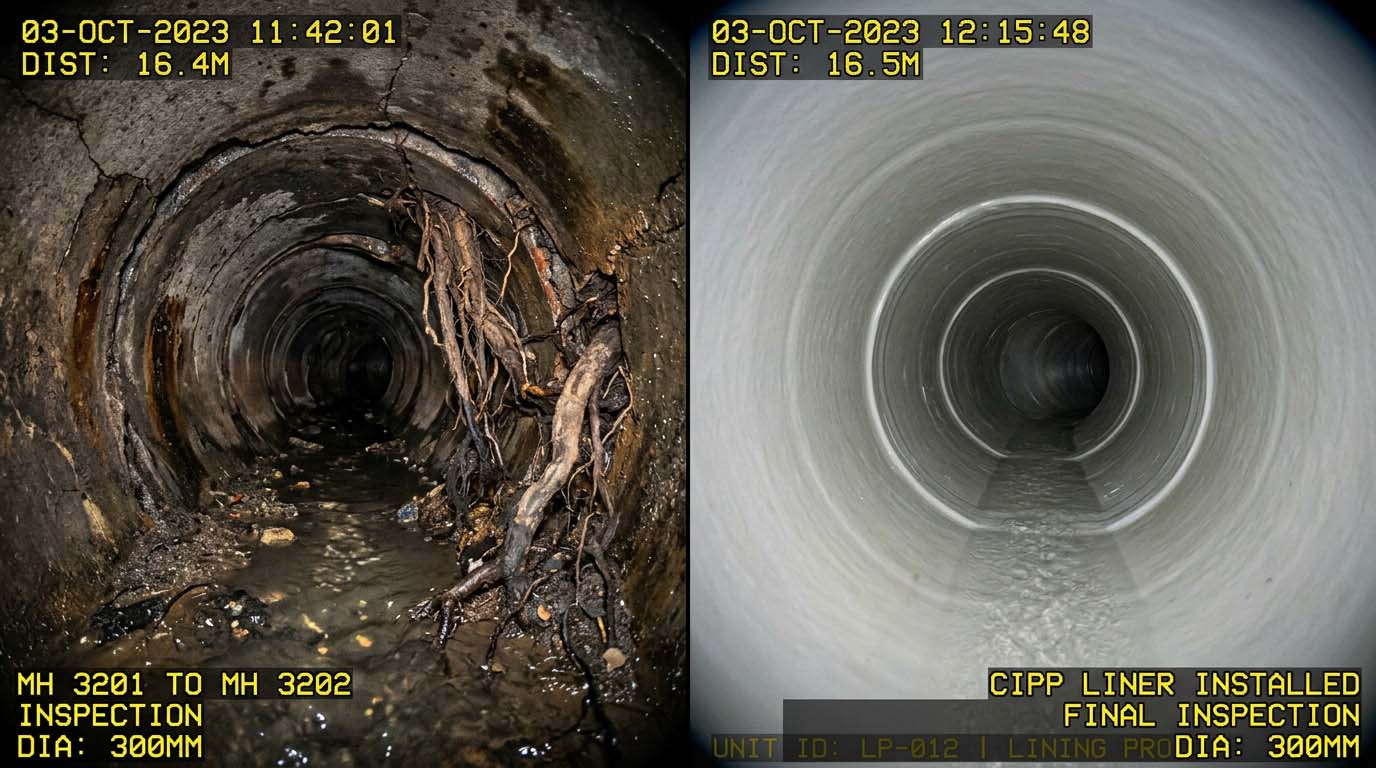
A camera inspection allows the pipe to be evaluated from the inside. The video may show roots, grease, offsets, cracks, collapsed sections, standing water, scale buildup, failed joints, or other conditions that can affect the repair plan.
Common conditions found during sewer video inspections
Root intrusion
Roots can enter through joints, cracks, or separated pipe sections. The inspection helps show how severe the intrusion is and whether cleaning alone is likely to be temporary.
Pipe offsets
An offset occurs when pipe sections no longer line up correctly. This can catch waste, paper, and debris, creating repeated blockage points.
Broken or cracked pipe
Visible cracking, fractures, or missing pipe sections can change the conversation from simple cleaning to repair or replacement planning.
Standing water
Water sitting in the line may indicate a belly, sag, or improper slope. This matters because some repair methods depend on the shape and grade of the existing pipe.
Inspection helps match the repair method to the pipe
Not every sewer problem calls for the same repair. Some lines may need cleaning, some may be candidates for trenchless repair, and others may require excavation. The inspection does not automatically choose the repair, but it gives the information needed to compare options more intelligently.
| Inspection Finding | Why It Matters |
|---|---|
| Roots in the line | May require cleaning, further evaluation, or repair if roots are entering through defects. |
| Cracks or fractures | Can indicate structural pipe damage that should be reviewed before choosing a method. |
| Collapsed section | May limit trenchless options and require access to the damaged area. |
| Heavy scale or buildup | May require cleaning before a full inspection or before certain repair options can be considered. |
| Low spots or bellies | Can cause recurring standing water and may affect long-term repair expectations. |
What customers should ask for
Ask to see the video
The inspection should show the relevant section of pipe clearly enough for the problem area to be understood.
Ask where the problem is located
Distance, depth, access points, and location can all affect the repair conversation.
Ask how the finding supports the recommendation
A repair recommendation should connect back to the visible pipe condition, not just the symptom you experienced.
A sewer inspection protects the decision-making process
The goal of a sewer video inspection is not to sell one repair method over another. The goal is to document what is happening inside the pipe so the customer can understand the condition, ask better questions, and compare repair options with clearer information.
Without video documentation, a sewer repair decision may rely too heavily on assumptions. With video documentation, the discussion can focus on the actual defect, the condition of the line, and the practical limits of each repair approach.
Compare sewer repair options with better information
Use Lining Pro to learn about sewer repair methods, trenchless options, and questions to ask before choosing a repair path.
Browse sewer repair contractors