Lining Pro.com Technical Guide
What Is Chain Knocking
What Is Chain Knocking?
Chain knocking is a mechanical pipe cleaning process used to remove heavy buildup from the inside of sewer and drain lines. In trenchless sewer repair, especially cast iron rehabilitation, chain knocking is commonly used to break apart rust scale, mineral buildup, corrosion deposits, and hardened debris that ordinary drain cleaning equipment cannot fully remove.
From the Lining Pro.com perspective, chain knocking is one of the most important preparation steps in many cast iron sewer rehabilitation projects. A trenchless liner is only as good as the pipe preparation underneath it. If the host pipe is packed with scale, rough buildup, grease, or loose corrosion, the contractor may need to mechanically descale the line before any serious lining or structural rehabilitation work can begin.
What Chain Knocking Actually Does
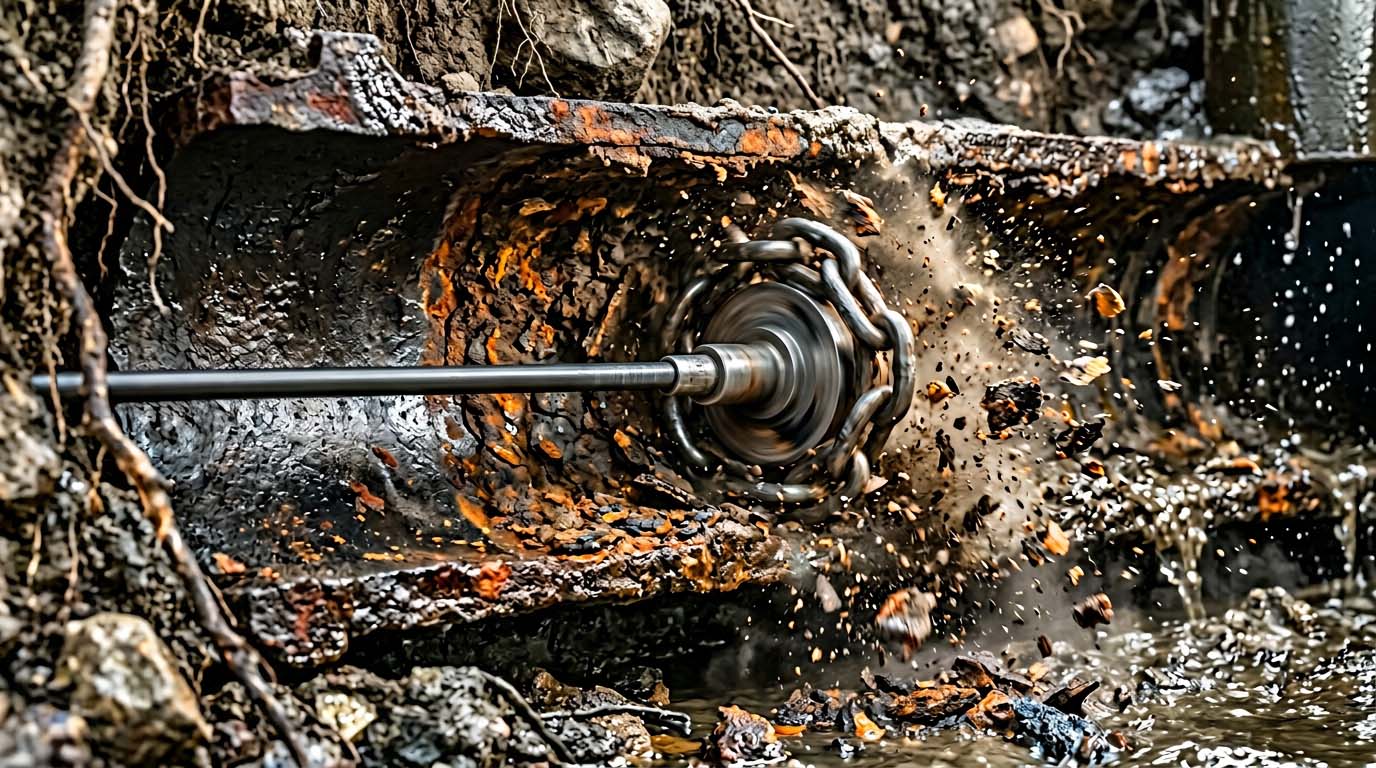
Chain knocking uses a rotating mechanical tool equipped with chains that spin at high speed inside the pipe. As the chains rotate, they strike and scrape the pipe wall, breaking apart internal buildup and corrosion deposits. The process is commonly paired with water flow or flushing so the loosened material can be carried out of the system.
In older cast iron sewer systems, years of corrosion can create thick internal scale that narrows the pipe diameter and creates a rough interior surface. Waste, paper, grease, and debris begin catching against that roughness, leading to recurring backups and poor flow. Chain knocking is designed to remove that buildup and expose the actual condition of the host pipe.
Plain English: chain knocking is essentially a controlled mechanical descaling process that scrubs the inside of the pipe wall.
Why Cast Iron Pipe Often Needs Chain Knocking
Cast iron pipe tends to fail differently than many modern pipe materials. Instead of simply cracking apart, cast iron usually corrodes internally over time. Rust scale builds layer after layer along the interior wall. Eventually the pipe may lose a significant amount of usable diameter even though the pipe itself is still physically present underground.
Many cast iron lines that appear “open” on a basic camera inspection are actually heavily restricted by corrosion deposits. A drain cable may punch a hole through the blockage, but the rough scale remains attached to the pipe wall. Chain knocking is often used when a contractor needs to remove that scale more aggressively before making repair decisions.
Heavy Rust Scale
Chain knocking can remove thick corrosion buildup attached to the inner wall of cast iron pipe.
Reduced Pipe Diameter
Years of buildup can dramatically narrow the usable opening inside the pipe.
Recurring Backups
Waste and paper catch more easily on rough pipe walls and scale deposits.
Preparation for Pipe Lining
Liners generally require a cleaner and more stable host pipe surface before installation.
Inspection Accuracy
Removing buildup allows the contractor to see the actual pipe condition more clearly.
Flow Improvement
Descaling can improve internal flow by reducing restrictions and roughness.
How the Chain Knocking Process Works
Camera Inspection of the Sewer Line
The contractor typically begins by inspecting the pipe with a sewer camera. This helps identify scale buildup, corrosion, offsets, root intrusion, standing water, collapsed sections, and overall pipe condition.
Selecting the Proper Chain Knocking Tool
Different chain knockers and chain sizes may be used depending on the pipe diameter, pipe material, access conditions, and severity of buildup. The contractor needs to match the tool to the pipe to avoid ineffective cleaning or unnecessary damage.
Mechanical Removal of Buildup
The rotating chains travel through the pipe while striking and scraping the interior wall. This breaks apart corrosion deposits, hardened buildup, and loose material attached to the host pipe.
Removing the Debris
The loosened material is flushed from the system using water flow or jetting equipment. This helps clear the line so the contractor can continue inspection or preparation work.
Post-Cleaning Camera Inspection
After descaling, the contractor re-inspects the line to evaluate the actual pipe condition. In some cases, the pipe may look much better after cleaning. In other cases, the cleaning process may reveal cracks, holes, severe channeling, or deterioration hidden behind the scale.
Chain Knocking vs Basic Drain Cleaning
Many property owners assume all drain cleaning is the same, but there is a major difference between clearing a clog and mechanically restoring the interior of a deteriorated cast iron pipe.
| Basic Drain Cleaning | Chain Knocking | Why It Matters |
|---|---|---|
| Often uses a cable to open flow temporarily. | Mechanically removes attached buildup from the pipe wall. | Scale left behind can continue causing recurring problems. |
| May restore short-term drainage. | Can improve usable diameter and inspection visibility. | The contractor sees the actual condition of the pipe more clearly. |
| Primarily targets the blockage itself. | Targets the buildup causing the restriction. | This is especially important for aging cast iron systems. |
| Often part of maintenance cleaning. | Commonly part of trenchless pipe rehabilitation preparation. | Proper prep is critical before lining. |
Why Chain Knocking Matters Before Pipe Lining
One of the most important reasons contractors use chain knocking is preparation for cured-in-place pipe lining, also called CIPP lining. A trenchless liner is installed against the interior wall of the existing pipe. If heavy scale, debris, or loose corrosion remains attached to the pipe, the liner may not seat correctly against the host pipe.
Proper preparation helps the contractor measure the pipe more accurately, improve liner contact, identify hidden defects, and reduce the risk of trapping debris beneath the liner. This is why many experienced trenchless contractors consider pipe preparation just as important as the liner installation itself.
Important: chain knocking does not rebuild missing pipe wall. It removes buildup so the contractor can properly evaluate and prepare the host pipe.
What Chain Knocking Can Reveal
One reason chain knocking is so important is because heavily scaled pipe can hide serious structural problems. A pipe may look restricted but intact before cleaning. After descaling, the contractor may discover severe bottom channeling, holes, cracks, thin pipe wall, failed joints, or exposed soil.
This is why experienced contractors often avoid making final repair recommendations until after the pipe has been cleaned and re-inspected. The real condition of the pipe may not be visible until the buildup is removed.
Problems That May Appear After Descaling
- Bottom channeling
- Pipe wall loss
- Hidden cracks
- Failed joints
- Thin pipe sections
- Corrosion holes
What Happens Next
- Pipe lining evaluation
- Spot repair planning
- Pipe bursting consideration
- Limited excavation
- Hybrid trenchless repair planning
- Final repair recommendation
Does Chain Knocking Damage the Pipe?
Chain knocking is aggressive compared to ordinary drain cleaning, which is why the process should be performed carefully and with the correct equipment. The goal is controlled descaling, not uncontrolled destruction. On severely deteriorated pipe, the cleaning process may expose damage that already existed beneath the buildup.
This is one reason inspection and contractor experience matter. A qualified trenchless contractor should understand when the pipe can be safely descaled, when lighter preparation is more appropriate, and when the pipe condition may already be beyond rehabilitation.
| Situation | Why Contractor Judgment Matters |
|---|---|
| Moderate Cast Iron Scale | The contractor may use chain knocking to restore diameter and prepare for lining. |
| Severely Fragile Pipe | Aggressive cleaning may expose existing structural failure. |
| Preparation for CIPP | The pipe must usually be properly cleaned before liner installation. |
| Pipe Already Collapsing | Excavation or replacement may become necessary regardless of cleaning method. |
When Chain Knocking Is Commonly Used
Cast Iron Rehabilitation
One of the most common uses for chain knocking is preparing aging cast iron for trenchless repair.
Recurring Sewer Backups
Repeated clogging may point to heavy internal buildup restricting the line.
Pre-Lining Preparation
Many CIPP lining projects require aggressive cleaning before installation.
Commercial Drain Systems
Restaurants, multifamily buildings, and commercial properties often experience buildup-related restrictions.
Pipe Condition Evaluation
Removing buildup helps the contractor determine whether the pipe can realistically be rehabilitated.
Flow Restoration
Descaling can improve usable pipe diameter and internal flow characteristics.
What Property Owners Should Ask
| Question | Why It Matters |
|---|---|
| Will the pipe be camera inspected before cleaning? | The contractor should understand the condition of the pipe before aggressive descaling begins. |
| Why are you recommending chain knocking? | The cleaning method should match the pipe condition and repair goals. |
| Is the pipe being prepared for lining? | Preparation requirements are often different for maintenance cleaning versus trenchless rehabilitation. |
| What happens if cleaning reveals severe damage? | The contractor should explain the contingency plan before work starts. |
| Will I receive post-cleaning video footage? | Final footage helps document the actual pipe condition after descaling. |
The Bottom Line
Chain knocking is one of the most important preparation methods used in modern cast iron sewer rehabilitation. It is designed to mechanically remove internal buildup so the contractor can evaluate, restore, and potentially rehabilitate the pipe correctly.
For trenchless sewer repair, proper preparation matters. A liner installed inside a poorly prepared pipe may not perform the way it should. That is why experienced trenchless contractors often spend significant time on cleaning, descaling, inspection, and verification before lining work begins.
Lining Pro.com helps users browse contractors who work in trenchless sewer repair, cast iron rehabilitation, CIPP lining, sewer inspection, descaling, hydro jetting, and structural pipe restoration. Customers should always do their own independent research, ask for camera footage, compare repair options, and make sure the proposed cleaning or repair method matches the actual condition of the pipe.
Browse Trenchless Sewer Repair Contractors
Use Lining Pro.com to browse contractors who specialize in trenchless sewer repair, cast iron rehabilitation, chain knocking, CIPP lining, hydro jetting, sewer inspection, and structural pipe restoration.
Browse Contractors