Lining Pro.com Technical Guide
What Is Hydrojetting
What Is Hydro Jetting?
Hydro jetting is a high-pressure sewer and drain cleaning process that uses pressurized water to remove grease, sludge, roots, scale, debris, and buildup from the inside of pipes. Unlike basic drain snaking, which often punches a temporary opening through a blockage, hydro jetting is designed to clean the interior pipe wall more thoroughly and restore usable flow capacity.
From the Lining Pro.com perspective, hydro jetting is one of the most important tools in modern sewer maintenance and trenchless pipe rehabilitation. It is commonly used in residential, commercial, industrial, and municipal systems both as a maintenance method and as a preparation step before trenchless sewer repair, CIPP lining, pipe bursting, or structural rehabilitation work.
What Hydro Jetting Actually Does
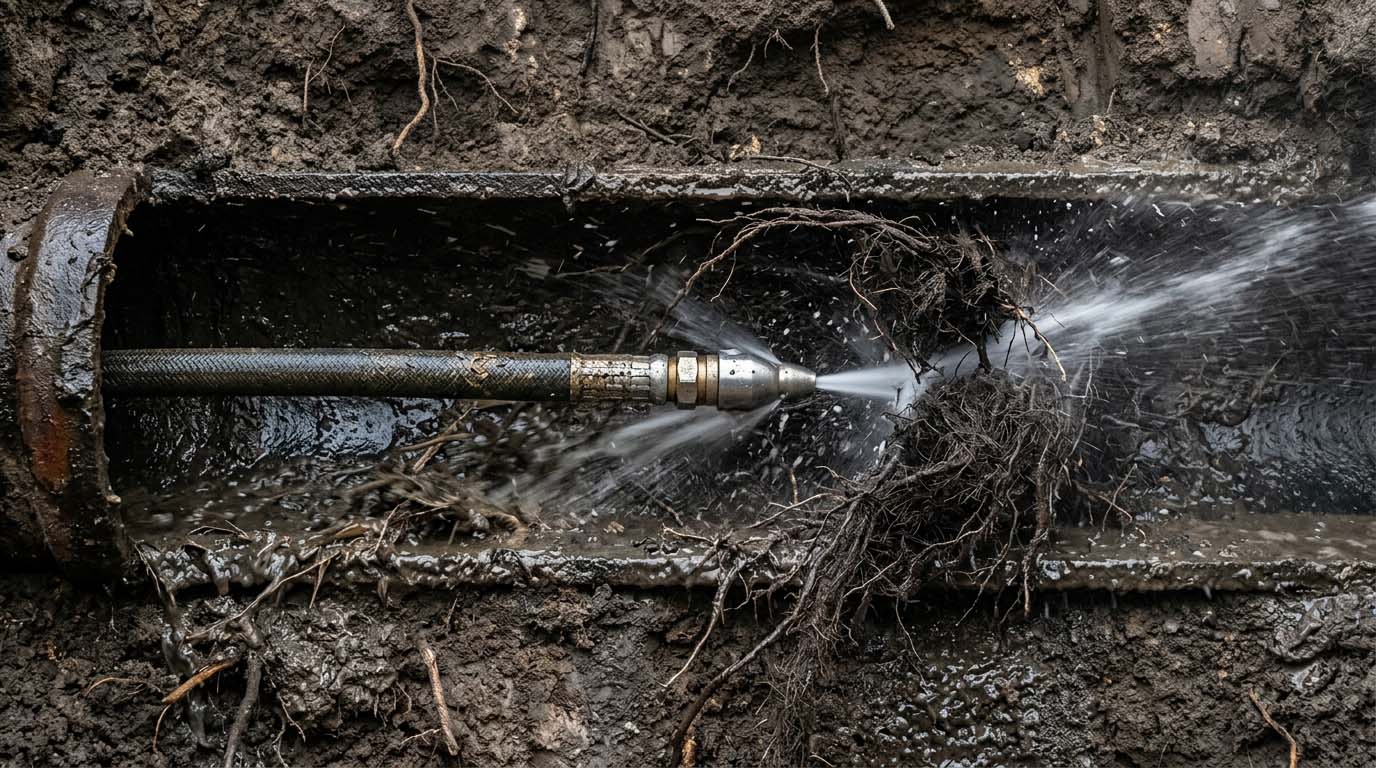
Hydro jetting works by sending pressurized water through a specialized hose and nozzle system inside the pipe. The nozzle directs water streams forward and backward at extremely high pressure. Forward-facing jets help break apart obstructions while rear-facing jets pull the hose through the pipe and scrub the pipe wall.
The goal is not just to open a hole through the blockage. The goal is to remove buildup attached to the pipe wall so the system can flow more effectively. This is why hydro jetting is commonly used on grease-heavy commercial lines, root intrusion, sludge buildup, and aging sewer systems where ordinary snaking may leave large amounts of debris behind.
Plain English: hydro jetting is like pressure washing the inside of a sewer line.
How Hydro Jetting Is Different From Drain Snaking
Many property owners assume hydro jetting and drain snaking are the same thing, but they solve problems differently. A drain snake or cable machine often creates a path through a blockage so water can move again. Hydro jetting is designed to clean the pipe more aggressively and remove material attached to the walls.
| Drain Snaking | Hydro Jetting | Why It Matters |
|---|---|---|
| Often punches through the blockage. | Attempts to clean the pipe wall more thoroughly. | Remaining buildup can continue causing recurring issues. |
| Common for basic stoppages. | Common for grease, sludge, roots, and heavy buildup. | Different problems require different cleaning methods. |
| May restore short-term flow. | May restore more usable pipe diameter. | Flow improvement depends on how much buildup is removed. |
| Often lower intensity cleaning. | Uses high-pressure water throughout the pipe. | Hydro jetting is typically more aggressive and comprehensive. |
| Usually does not fully clean pipe walls. | Designed to remove attached debris and deposits. | This is especially important before trenchless lining. |
What Hydro Jetting Can Remove
Hydro jetting is commonly used because sewer systems collect much more than ordinary clogs. Over time, pipes can develop grease accumulation, soap buildup, sludge, roots, mineral scale, food waste, sediment, paper buildup, and hardened debris attached to the pipe wall.
Grease Buildup
Restaurants and kitchen drain systems often accumulate heavy grease that narrows the pipe diameter.
Sludge and Debris
Sewer lines can collect sludge, sediment, paper buildup, and organic waste over time.
Root Intrusion
Hydro jetting may help cut and flush smaller root masses from sewer lines.
Soap and Scale
Soap residue and mineral deposits can build up along pipe walls and restrict flow.
Food Waste
Commercial kitchens and food-service environments often develop buildup from organic waste.
Loose Corrosion Debris
In older systems, hydro jetting may help remove loose rust and corrosion material.
How the Hydro Jetting Process Works
Camera Inspection of the Pipe
Many contractors begin by inspecting the sewer line with a camera. This helps identify roots, buildup, offsets, cracks, standing water, pipe material, and possible collapse conditions before aggressive cleaning begins.
Selecting the Proper Nozzle and Pressure
Different nozzles are designed for different cleaning conditions. Some are intended for grease, others for roots, flushing, cutting, or heavy debris removal. Pressure levels and flow rates are adjusted based on pipe condition and material.
High-Pressure Water Cleans the Pipe
The hydro jetting hose moves through the pipe while pressurized water breaks apart buildup and flushes debris downstream. The rear-facing jets help propel the hose and scrub the pipe wall.
Debris Is Removed From the System
Grease, sludge, roots, and loosened material are flushed from the pipe so the contractor can continue evaluating or preparing the system.
Post-Jetting Camera Inspection
After cleaning, the contractor may reinspect the pipe to evaluate the actual pipe condition and determine whether additional repair work is necessary.
Why Hydro Jetting Matters Before Trenchless Sewer Repair
One of the biggest reasons hydro jetting is used in the trenchless industry is preparation. Trenchless pipe lining depends on proper host pipe preparation. If grease, roots, sludge, loose debris, or buildup remain attached to the pipe wall, the liner may not seat correctly during installation.
Hydro jetting helps prepare the pipe so the contractor can inspect it accurately and create a cleaner internal surface before rehabilitation begins. This is especially important for cast iron pipe, root-damaged clay lines, commercial grease systems, and aging sewer laterals.
Important: hydro jetting cleans the pipe. It does not rebuild missing pipe wall, fix collapse, or correct severe structural defects by itself.
Hydro Jetting and Cast Iron Pipe
Hydro jetting is often used on cast iron sewer systems, but the contractor has to understand the condition of the pipe before aggressive cleaning begins. Older cast iron may contain heavy scale, bottom channeling, thin pipe wall, or hidden corrosion damage.
In some cases, hydro jetting is combined with chain knocking or mechanical descaling to prepare the line for trenchless rehabilitation. In other cases, cleaning may reveal that the pipe is too deteriorated for lining and requires excavation or replacement instead.
Common Cast Iron Conditions
- Internal rust scale
- Bottom channeling
- Recurring backups
- Heavy debris buildup
- Corrosion deposits
- Restricted flow diameter
Possible Next Steps
- Mechanical descaling
- CIPP lining evaluation
- Spot repair planning
- Pipe bursting consideration
- Hybrid trenchless repair
- Full replacement assessment
Commercial and Municipal Uses for Hydro Jetting
Hydro jetting is heavily used in commercial and municipal environments because buildup can become a recurring operational problem. Restaurants, multifamily buildings, hotels, schools, healthcare facilities, industrial systems, and municipal sewer systems all generate conditions where grease, sludge, sediment, and debris accumulate over time.
Routine jetting programs are often used as preventative maintenance to keep systems functioning and reduce emergency backups. In municipal systems, hydro jetting may also be part of larger sewer inspection and rehabilitation programs.
| Property Type | Common Problem | Why Hydro Jetting Is Used |
|---|---|---|
| Restaurants | Grease accumulation | Helps remove grease buildup from kitchen drain systems. |
| Apartment Buildings | Heavy system usage | Can help maintain larger shared drain systems. |
| Commercial Facilities | Operational downtime concerns | Maintenance cleaning may help reduce emergency stoppages. |
| Municipal Sewer Systems | Sediment and debris accumulation | Used as part of sewer maintenance and inspection programs. |
| Residential Homes | Recurring sewer backups | May restore flow and prepare lines for further inspection. |
Can Hydro Jetting Damage Pipes?
Hydro jetting is a powerful cleaning process, which is why inspection and contractor judgment matter. Severely deteriorated pipes, collapsed sections, fragile Orangeburg pipe, poorly connected joints, or heavily corroded cast iron may require careful evaluation before aggressive jetting begins.
A qualified contractor should understand how much pressure is appropriate for the pipe material and condition. In some situations, the cleaning process may expose structural problems that were already hidden beneath grease, debris, or buildup.
Lining Pro note: hydro jetting should be treated as a professional sewer cleaning process, not simply “blasting water into a pipe.” The condition of the sewer line matters.
Questions to Ask Before Hydro Jetting
| Question | Why It Matters |
|---|---|
| Will the pipe be camera inspected first? | The contractor should understand the pipe condition before aggressive cleaning begins. |
| Why are you recommending hydro jetting? | The cleaning method should match the actual blockage or buildup condition. |
| Is the pipe being prepared for trenchless lining? | Preparation requirements are often different before rehabilitation work. |
| What happens if cleaning reveals major pipe damage? | The contractor should explain the possible next steps ahead of time. |
| Will I receive post-cleaning camera footage? | Final footage helps document the actual pipe condition after cleaning. |
The Bottom Line
Hydro jetting is one of the most effective sewer cleaning methods used in modern drain maintenance and trenchless sewer rehabilitation. By using high-pressure water to remove grease, sludge, roots, and buildup from the pipe wall, hydro jetting can restore flow, improve inspection visibility, and prepare sewer systems for additional repair work.
But hydro jetting is not a universal solution for every sewer problem. Cleaning alone does not repair collapsed pipe, missing pipe wall, severe bellies, or major structural defects. The value comes from combining proper inspection, proper cleaning, proper repair planning, and proper verification.
Lining Pro.com helps users browse contractors who work in hydro jetting, trenchless sewer repair, cast iron rehabilitation, CIPP lining, sewer inspection, and structural sewer restoration. Customers should always do their own independent research, review inspection footage, compare repair options, and make sure the proposed cleaning or rehabilitation method matches the actual condition of the pipe.
Browse Trenchless Sewer Repair Contractors
Use Lining Pro.com to browse contractors who specialize in hydro jetting, trenchless sewer repair, cast iron rehabilitation, sewer inspection, CIPP lining, and structural sewer restoration.
Browse Contractors