Sewer Lateral Responsibility Guide
Sewer Lateral Responsibility Guide
What Is a Sewer Lateral, and Who Is Responsible for Fixing It?
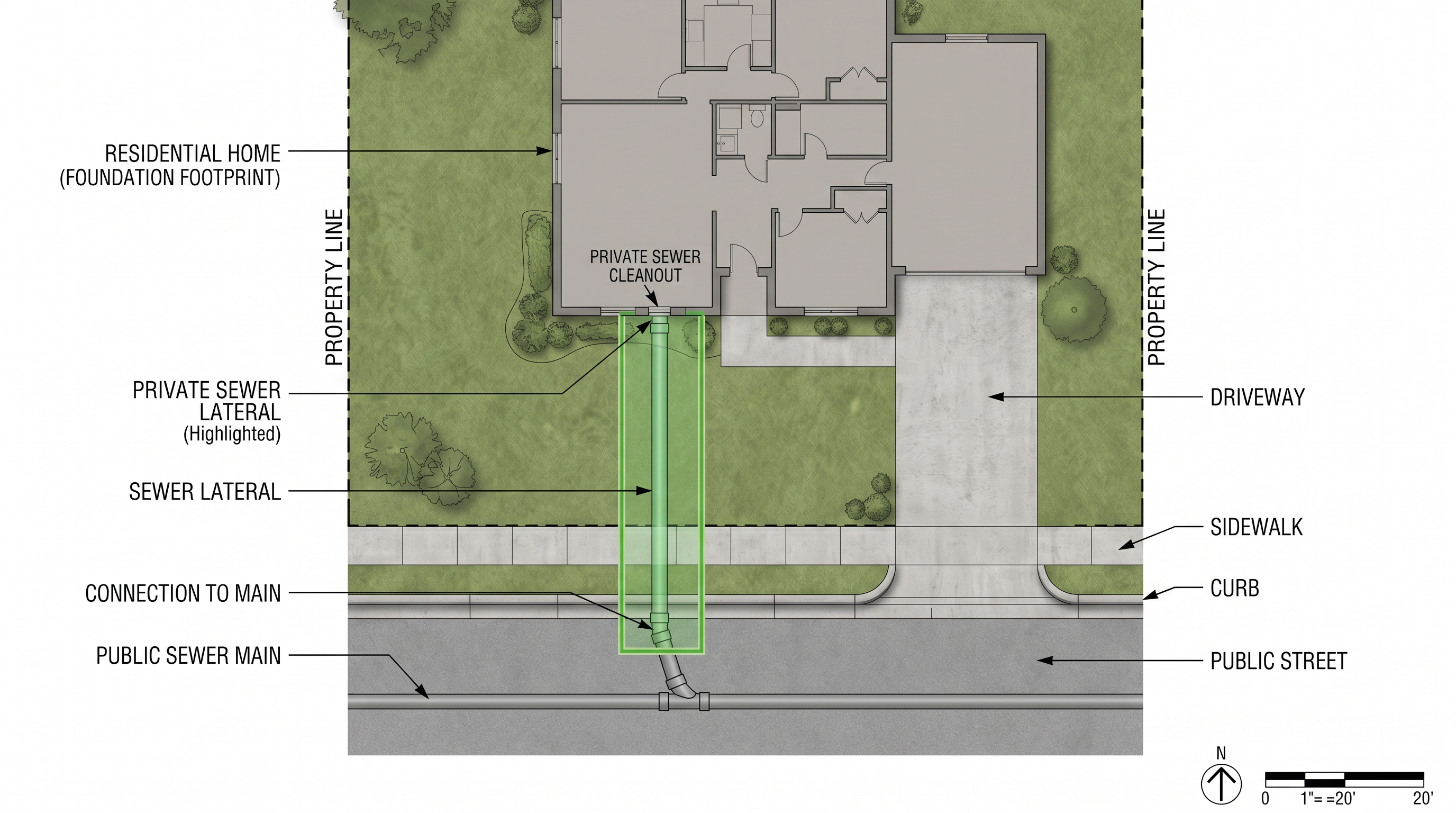
A sewer lateral is the pipe that carries wastewater from a home, building, or private property to the public sewer main or to another approved wastewater connection point. It is one of the most important parts of a plumbing system, but it is also one of the least understood. Most homeowners know where their toilets, sinks, showers, and floor drains are located. Far fewer know where the underground sewer lateral runs, how deep it is, what material it is made from, or who is legally responsible when it cracks, collapses, clogs, leaks, or allows roots into the line.
The responsibility question is where things become complicated. In many parts of the United States, the property owner is responsible for some or all of the sewer lateral, while the city, county, utility authority, or sanitary district is usually responsible for the public sewer main. However, the exact dividing line is not consistent nationwide. In one municipality, the homeowner may be responsible only from the house to the property line. In another, the homeowner may be responsible all the way to the public sewer main, including the portion under the sidewalk, street, alley, or public right-of-way. In some locations, the city may repair certain structural failures in the right-of-way. In others, the owner may still be responsible even when the failed portion is outside the visible property boundary.
Important legal note: This article is educational only. Sewer lateral ownership, inspection rules, repair responsibility, permit requirements, and reimbursement programs can change by state, county, city, utility district, sewer authority, HOA, and property type. Always verify current rules with your local building department, wastewater utility, municipal code, county code, sewer district, and qualified legal or permitting professional before relying on any responsibility assumption.
What is a sewer lateral?
A sewer lateral is the service pipe that connects a private building drain to the larger public sewer system. In a typical residential setting, wastewater leaves the home through the building drain, flows into the private sewer lateral, and eventually reaches the public sewer main. From there, wastewater is transported through the municipal collection system to a treatment facility.
The sewer lateral may run under a front yard, side yard, driveway, sidewalk, alley, street, landscaped area, slab, patio, or parking lot. It may be made from cast iron, clay, PVC, ABS, Orangeburg, concrete, or another material depending on the age and location of the property. Older sewer laterals may develop root intrusion, cracks, offsets, corrosion, bellies, collapsed sections, or leaking joints. These defects can cause recurring sewer backups, slow drains, foul odors, wet yard areas, and infiltration into the public sewer system.
The word lateral can be confusing because different jurisdictions define it differently. Some codes use terms such as private sewer lateral, sanitary sewer lateral, building sewer, house connection, service lateral, lower lateral, upper lateral, or private service line. The definition matters because responsibility often follows the definition used in the local code.
Why sewer lateral responsibility is not always obvious
Many homeowners assume that if a pipe is under the street, the city must be responsible. That is not always true. In many communities, the sewer main is public, but the lateral that connects the home to that main remains private. Some local codes make the property owner responsible for the entire service connection, including the section beyond the property line. Other places divide responsibility at the property line, curb line, cleanout, easement, or main connection.
This is why two homeowners in different states, or even two homeowners in neighboring cities, may receive different answers. One city may operate a sewer lateral assistance program. Another may require owners to inspect and repair private laterals during renovations or property transfers. Another may consider the lower lateral under the public right-of-way to be the owner’s responsibility. Another may assume responsibility only if the failure is in the public main rather than the service connection.
Because of this variation, no national article should be treated as final proof of legal responsibility. The correct answer is the current local rule that applies to the specific property.
The most common responsibility pattern
Although rules vary, the most common pattern is that the property owner is responsible for the private sewer lateral, and the municipality or utility is responsible for the public sewer main. The hard part is identifying exactly where the private lateral ends and the public system begins.
| System Part | Common Responsibility | What to Verify |
|---|---|---|
| Building drain inside the home | Property owner | Local plumbing code and property type |
| Private sewer lateral on private property | Usually property owner | Whether repairs require permits or inspection |
| Lateral under sidewalk or right-of-way | Varies widely | City, sewer district, easement, and ordinance language |
| Connection at public sewer main | Varies | Tap, wye, saddle, or main connection rules |
| Public sewer main | Usually public utility or sewer authority | Whether the issue is actually in the main or in the lateral |
State-by-state responsibility snapshot
The following table is a research starting point, not a legal conclusion. In most states, sewer lateral responsibility is not answered by one simple statewide rule. Local ordinances, sewer district rules, municipal utility policies, subdivision agreements, easements, and property-specific documents often control. Use this table as a practical direction for where to look, then verify the current rule locally.
| State | Typical Starting Assumption | Where to Verify |
|---|---|---|
| Alabama | Owner often responsible for private lateral; public utility usually handles main. | City sewer ordinance, county utility, local plumbing department. |
| Alaska | Responsibility may depend heavily on city utility rules and extreme climate infrastructure. | Municipal utility code and local public works department. |
| Arizona | Owner commonly responsible for service line; right-of-way rules vary locally. | City wastewater department and sewer service agreement. |
| Arkansas | Owner responsibility is common for private laterals, but local utility policy controls. | Municipal code and sanitary sewer district rules. |
| California | Many districts place full private lateral responsibility on the owner, sometimes including right-of-way portions. | City, county sanitation district, and private sewer lateral ordinance. |
| Colorado | Owner often maintains the service lateral; utility maintains the main. | Water and sanitation district standards. |
| Connecticut | Local sewer authorities often define responsibility by connection point or property line. | Town sewer authority and municipal code. |
| Delaware | Responsibility varies by county, municipality, and utility provider. | County sewer district and local permit office. |
| Florida | State law recognizes sanitary sewer laterals as privately owned in certain municipal program contexts, but local program rules still matter. | City or county sewer lateral policy, building department, wastewater utility. |
| Georgia | Property owners are often responsible for private service laterals. | City public works department and sewer ordinance. |
| Hawaii | Responsibility can depend on county wastewater rules and property connection details. | County wastewater branch and local code. |
| Idaho | Owner responsibility is common for private laterals; district standards may vary. | Local sewer district and city code. |
| Illinois | Municipal rules often determine whether responsibility extends to the main or stops at the property line. | City sewer ordinance and public works department. |
| Indiana | Property owners commonly maintain laterals, but local utility rules control. | Sanitary district and municipal code. |
| Iowa | Owner responsibility is common for private laterals and repairs may require permits. | City code, sewer utility, county environmental health office. |
| Kansas | Responsibility frequently follows local service line definitions. | City wastewater department and utility service rules. |
| Kentucky | Local sewer districts commonly define owner versus utility responsibility. | Metropolitan sewer district or municipal utility. |
| Louisiana | Owner responsibility may vary with parish, city, and utility system. | Parish sewer authority and city permits. |
| Maine | Local sewer districts and towns often control lateral maintenance rules. | Town sewer ordinance and public works office. |
| Maryland | Responsibility varies by county utility and municipal code. | County water and sewer authority. |
| Massachusetts | Older infrastructure and town rules make local verification essential. | Town sewer department and plumbing inspector. |
| Michigan | Owners commonly maintain private laterals; municipal programs may affect inspection requirements. | City code and sewer department. |
| Minnesota | Property owner responsibility is common, especially for private service connections. | City public works department and sanitary sewer ordinance. |
| Mississippi | Responsibility often depends on local utility service definitions. | City or county wastewater department. |
| Missouri | Owner responsibility is common for laterals, with some regional sewer district programs. | Sewer district standards and municipal code. |
| Montana | Local city or district rules typically control service lateral responsibility. | Municipal utility and sewer district office. |
| Nebraska | Property owners are often responsible for private laterals. | City utilities department and municipal code. |
| Nevada | Responsibility often depends on municipal or regional utility rules. | Water reclamation district and city code. |
| New Hampshire | Town and city sewer rules often define maintenance responsibility. | Local sewer department and town code. |
| New Jersey | Local authority rules may place broad responsibility on property owners, including some right-of-way portions. | Municipal utilities authority and local ordinance. |
| New Mexico | Responsibility varies by city utility and service line definition. | Municipal wastewater department and utility rules. |
| New York | City and village rules vary widely; dense urban systems require careful local verification. | Local DEP, public works, or sewer district code. |
| North Carolina | Owner responsibility is common for laterals from the structure toward the main. | City utilities department and county code. |
| North Dakota | Local utility rules usually define responsibility. | City sewer ordinance and public works department. |
| Ohio | Owners often maintain house laterals; local sanitary district rules may vary. | City sewer department and county sanitary engineer. |
| Oklahoma | Owner responsibility is common for service laterals. | Municipal utilities authority and local code. |
| Oregon | Responsibility often depends on city sewer code and property connection point. | City sewer bureau or public works department. |
| Pennsylvania | Municipal authorities often define responsibility; some communities place broad responsibility on owners. | Municipal authority and borough or township code. |
| Rhode Island | Local sewer authority rules should be checked property by property. | City or town sewer department. |
| South Carolina | Owner responsibility is common for private service lines. | Municipal utility and sewer district. |
| South Dakota | Local public works or utility rules typically control. | City sewer ordinance and utility department. |
| Tennessee | Responsibility often follows local utility policy and connection point definitions. | City wastewater department and utility board. |
| Texas | Many cities place responsibility on owners for private laterals, with some exceptions in public easements or right-of-way. | City water utility, public works, and municipal code. |
| Utah | Local sewer districts commonly define lateral responsibility. | City utility or sewer improvement district. |
| Vermont | Town and municipal sewer rules generally control responsibility. | Town sewer ordinance and public works department. |
| Virginia | Responsibility varies by city, county, service authority, and connection location. | Local service authority and county code. |
| Washington | City sewer codes often define owner responsibility for side sewers and laterals. | City side sewer code and public utilities department. |
| West Virginia | Local public service districts and utilities usually define responsibility. | Public service district and municipal code. |
| Wisconsin | Property owner responsibility is common and may include private laterals even when roots come from right-of-way trees. | Village or city ordinance and sanitary district policy. |
| Wyoming | Local sewer utility rules generally control private lateral responsibility. | City utility department and local code. |
What homeowners should check before paying for repairs
Confirm whether the problem is in the lateral or the public main
A backup may be caused by a private lateral issue, a shared line, or a public main problem. Camera inspection and utility review can help determine the location.
Find the local responsibility line
Do not assume the property line decides responsibility. Some local codes use the main connection, curb, cleanout, easement, or right-of-way instead.
Ask whether repair, replacement, or lining requires permits
Many jurisdictions require plumbing permits, lateral permits, right-of-way permits, traffic control, or utility inspections.
Check for rebates or assistance
Some cities and sewer districts offer rebates, cost-sharing, inspection programs, or rehabilitation incentives, especially where leaking laterals contribute to inflow and infiltration.
Why sewer laterals matter to the public sewer system
A defective private sewer lateral does not only affect one house. Cracked, leaking, or poorly connected laterals can allow groundwater and stormwater to enter the sanitary sewer system. This is often called inflow and infiltration. Extra water entering the sewer system can increase treatment costs, overload infrastructure, contribute to sanitary sewer overflows, and create public health concerns.
This is one reason some municipalities have private sewer lateral inspection programs. A city may require inspection when a property is sold, when a major remodel is permitted, when a sewer backup occurs, or when a neighborhood rehabilitation program is underway. These programs are usually local, not universal.
Final takeaway
A sewer lateral is the private or service pipe that connects a building to the public sewer system. In many places, the property owner is responsible for maintaining and repairing that pipe, but the exact legal boundary varies widely. Some owners are responsible only to the property line. Others may be responsible all the way to the public sewer main. Some municipalities offer rebates or repair programs. Others place the full cost on the property owner.
The most important lesson is this: do not rely on assumptions. Do not assume the city owns the pipe because it is under the street. Do not assume the homeowner owns only the pipe inside the yard. Do not assume rules are the same across state lines. Always verify current state law, local code, utility policy, sewer district rules, easement language, permit requirements, and property-specific documents before deciding who must pay for sewer lateral repair.
For homeowners, a sewer video inspection, a call to the local sewer authority, and a review of local ordinances can prevent expensive misunderstandings. Sewer lateral responsibility is not always intuitive, but with the right research, the repair path becomes much clearer.
Learn before you commit to sewer repair
Lining Pro helps homeowners understand sewer laterals, sewer repair options, trenchless methods, and the questions to ask before making major underground infrastructure decisions.
Learn how trenchless sewer repair works Browse sewer repair contractors