Lining Pro.com Technical Brief
Sewer Sleeve | Is iit right for your failing sewer line?
Sewer Sleeve | Is It Right for Your Failing Sewer Line?
A sewer sleeve can be a smart repair option when a sewer line has a localized defect, but it is not the right answer for every failing pipe. The term is often used casually, so homeowners should ask exactly what type of sleeve, liner, patch, or sectional repair is being proposed.
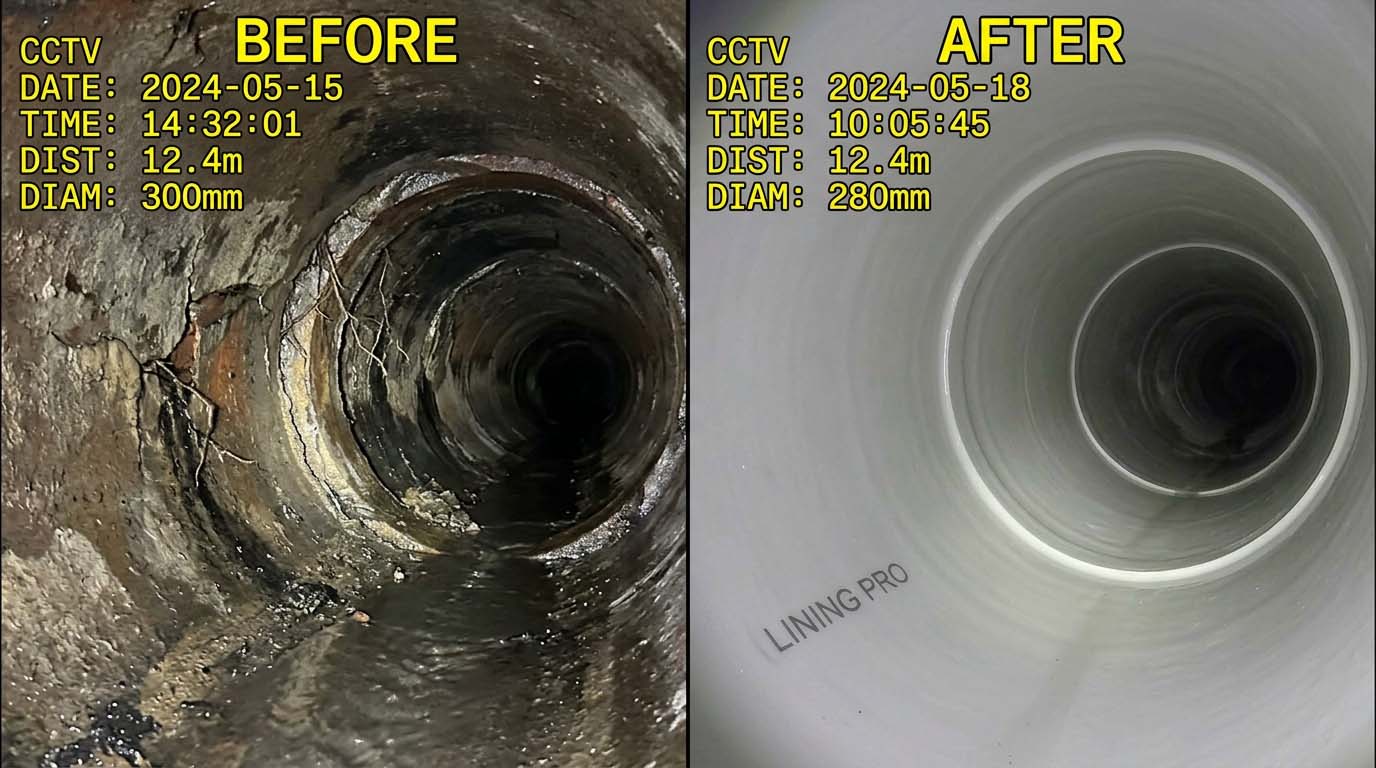
In most residential sewer repair conversations, a sewer sleeve usually means a short internal liner installed inside the existing pipe to reinforce or seal one damaged section. It may help with an isolated crack, joint separation, root entry point, or small damaged area. It may not solve widespread deterioration, collapse, severe bellies, or pipe slope problems.
What Does “Sewer Sleeve” Really Mean?
“Sewer sleeve” is not always used as a strict technical term. Some contractors use it to describe a sectional cured-in-place repair. Some use it to describe a short liner patch. Others may use it as simple homeowner-friendly language for “lining the pipe.” Because the term can mean different things, the first step is clarification.
Plain English: a sewer sleeve usually means a repair installed inside the existing sewer pipe, but you should confirm whether it is a short point repair or a full-length liner.
When a Sewer Sleeve May Make Sense
One Cracked Section
A short sleeve may reinforce a localized crack if the rest of the pipe is still serviceable.
Root Entry Point
After roots are removed, a sleeve may help seal the opening where roots entered.
Minor Joint Separation
A sectional sleeve may bridge and seal a damaged joint area.
Small Hole or Defect
A sleeve may stabilize an isolated area without replacing the entire line.
Limited Excavation Goal
If the pipe is under a driveway, slab, patio, or finished surface, a sleeve may reduce digging.
Spot Repair Strategy
A sleeve can be useful when the problem is one specific defect, not an entire failing system.
When a Sewer Sleeve May Not Be Enough
A sewer sleeve can fix a section, but it does not correct every sewer problem. If the pipe is failing throughout the run, a short sleeve may only cover one symptom. If the pipe has a severe belly, missing section, collapse, major deformation, or bad grade, the repair may require excavation, pipe bursting, full CIPP lining, or replacement.
| Pipe Condition | Is a Sleeve Likely Enough? | What May Be Needed Instead |
|---|---|---|
| One isolated crack | Possibly | Sectional sleeve or point repair |
| One root entry point | Possibly | Root removal plus sleeve or liner repair |
| Repeated cracks throughout the line | Usually not | Full-length CIPP lining or replacement evaluation |
| Severe belly holding waste | No | Excavation and grade correction |
| Collapsed pipe | No | Excavation, pipe bursting, or replacement |
| Failing cast iron throughout the run | Usually not | Descaling, full lining, pipe bursting, or replacement planning |
How a Sewer Sleeve Is Usually Installed
Camera the Sewer Line
The contractor should inspect the line and locate the exact defect. The sleeve location should be based on video evidence, not guesswork.
Clean the Pipe
The damaged area may need hydro jetting, root cutting, chain knocking, or descaling so the sleeve can seat properly.
Place the Sleeve at the Defect
The sleeve or liner patch is positioned inside the pipe and expanded against the pipe wall at the repair location.
Harden the Repair
The resin system cures and forms a hardened internal repair section inside the existing pipe.
Review the Finished Work
Final camera footage should confirm placement, flow path, repair quality, and any remaining limitations.
Questions to Ask Before Approving a Sewer Sleeve
| Question | Why It Matters |
|---|---|
| Is this a sectional repair or full pipe lining? | The word sleeve can mean different repair scopes. |
| How long is the repair section? | A short sleeve only repairs the area it covers. |
| Can I see the camera footage? | The repair should match the visible defect. |
| Is the rest of the pipe still in good enough condition? | A sleeve may not help if the entire line is failing. |
| What material and resin system are being used? | Material selection affects repair performance. |
| Will I receive final video? | Final footage helps document the completed repair. |
The Bottom Line
A sewer sleeve may be the right repair when the sewer line has a localized defect and the rest of the pipe is still serviceable. It can be less invasive than excavation and more targeted than replacing an entire run.
But a sewer sleeve is not a cure-all. If the sewer line has widespread deterioration, collapsed pipe, severe slope problems, or repeated defects throughout the run, a sleeve may not be enough. The decision should come from a real camera inspection and a clear explanation of the pipe condition.
Research Sewer Repair Contractors
Use Lining Pro.com to browse contractors who specialize in sewer inspection, sewer sleeve repairs, CIPP lining, pipe bursting, hydro jetting, cast iron rehabilitation, and trenchless sewer repair.
Browse Contractors