Insurance, Cast Iron Plumbing, Sewer Inspection
Cast Iron Mitigation Reports & Homeowners Insurance
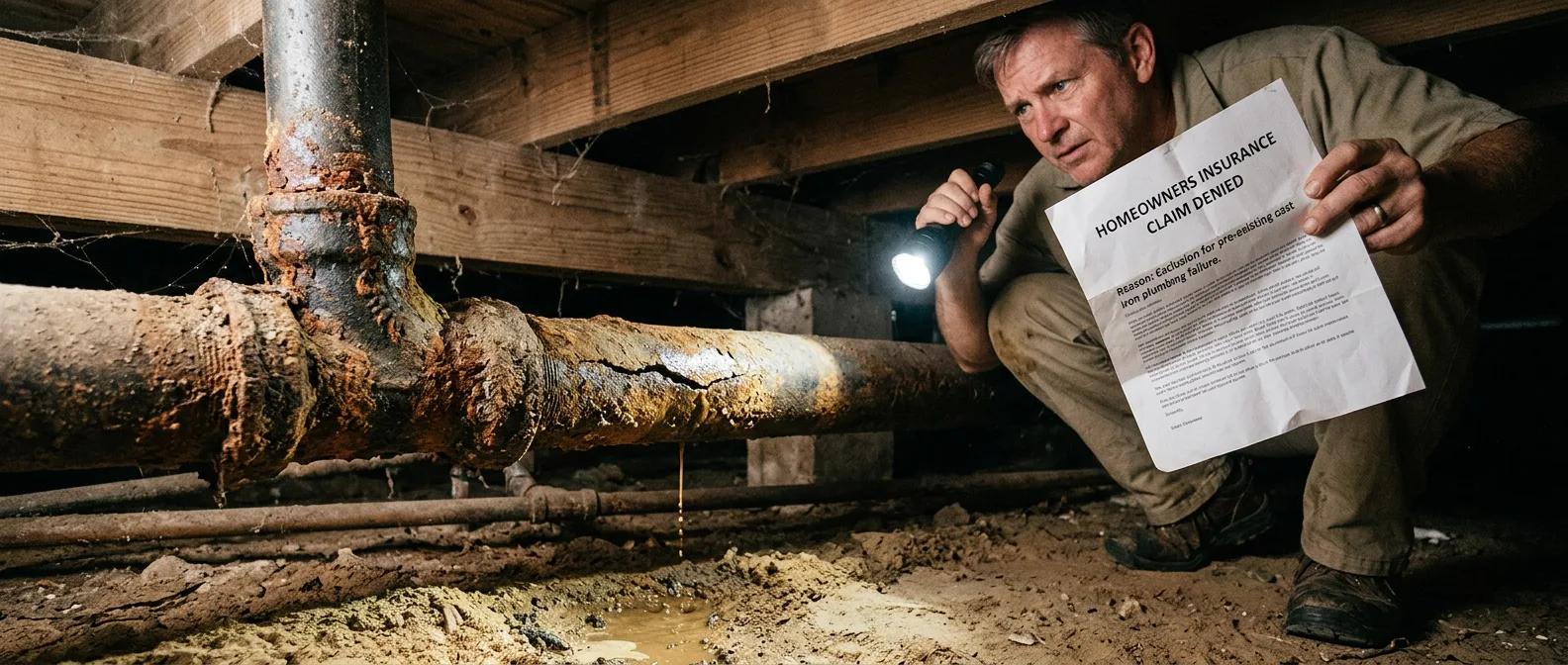
A cast iron mitigation report is not a single universal government form, and it should not be described as a guaranteed statewide insurance requirement. In practice, the term is often used informally by homeowners, real estate agents, plumbers, inspectors, and insurance professionals when older cast iron drain, waste, and vent piping becomes an underwriting concern during a homeowners insurance application, renewal, sale, or 4-point inspection review.
Important notice: This article is general educational information only. Insurance rules, carrier guidelines, underwriting appetites, state programs, inspection forms, and eligibility standards can change. Homeowners, buyers, sellers, agents, and contractors should perform their own independent research and verify requirements directly with the insurance carrier, licensed insurance agent, state insurance department, local inspector, and qualified plumbing professional involved in the property.
What People Usually Mean by a Cast Iron Mitigation Report
The phrase cast iron mitigation report is usually not the name of a statutory form. It is more often a practical phrase used to describe paperwork that attempts to answer a simple insurance question: does this older plumbing system create an unacceptable water damage, backup, leakage, or failure risk?
For a property with original cast iron drain lines, especially a slab-on-grade home, the concern is not only whether water supply piping is functional. The bigger issue is whether buried or concealed cast iron drain, waste, and vent piping may be corroded, cracked, scaled, leaking below the slab, separated at joints, holding waste, allowing root intrusion, or approaching the end of serviceable life.
In a homeowners insurance setting, the requested documentation may be described using different language. One carrier may ask for a plumbing inspection. Another may ask for a 4-point inspection. Another may ask for proof of repair. A buyer or agent may ask for a sewer scope. A contractor may describe the same documentation package as a cast iron condition report, cast iron mitigation report, sewer camera report, or cast iron pipe evaluation.
How This Relates to a 4-Point Inspection
A 4-point inspection is a targeted insurance inspection that reviews four major home systems: roof, electrical, plumbing, and HVAC. It is not the same thing as a full home inspection, and it is not the same thing as a sewer camera inspection. The 4-point inspection is normally designed to help the insurer evaluate risk connected to the systems most likely to create major claims.
In Florida, 4-point inspections are especially common in homeowners insurance underwriting for older properties. Citizens Property Insurance Corporation publicly states that it requires a 4-point inspection for certain property owner, dwelling, and mobile home applications for properties more than 20 years old. Citizens also states that the inspector checks the electrical system, plumbing, heating/cooling system, and roof, and must provide the age, type, and condition of the wiring, heating, plumbing systems, and roof.
The Florida Department of Financial Services also explains that if an insurer requests a 4-point or specialized inspection and it is not provided, the insurer may refuse to provide certain coverage or may refuse to insure the property. That does not mean every property needs a cast iron mitigation report. It means that when an insurer asks for documentation, the homeowner should treat the request as an underwriting issue and confirm exactly what the carrier needs.
| Insurance or transaction step | Common document | Where cast iron may be evaluated |
|---|---|---|
| New homeowners insurance application | 4-point inspection | Plumbing section may identify pipe material, age, condition, leaks, and visible concerns. |
| Insurance renewal | Updated 4-point, carrier inspection, or specialized plumbing review | Carrier may request current proof that plumbing remains serviceable or that prior defects were corrected. |
| Real estate purchase | Home inspection, sewer scope, plumbing inspection, or contractor report | Buyer may want evidence of drain line condition before closing, especially on older homes. |
| Underwriting exception or repair request | Mitigation proof, invoice, permit, camera video, letter, or post-repair report | Documentation may show replacement, lining, repair, cleaning, descaling, or other corrective work. |
Why Cast Iron Drain Lines Matter to Homeowners Insurance
Cast iron pipe was widely used in older homes because it is strong, quiet, fire resistant, and historically durable. The concern is that cast iron does not fail in a uniform way. Pipe condition depends on soil chemistry, age, installation quality, water use, waste chemistry, venting, slope, settlement, maintenance history, and whether the pipe has spent decades carrying aggressive wastewater below a slab.
From an underwriting perspective, deteriorated drain piping can be associated with water damage, sewage backup, hidden moisture, mold-related disputes, flooring removal, cabinet removal, slab access, and expensive remediation. Even when the supply plumbing is newer, the underground drain system may still be original. That difference matters because a 4-point inspection may identify plumbing type and visible condition, but it may not fully document the interior condition of buried drain lines.
This is where the informal phrase cast iron mitigation report can become useful. It gives contractors, agents, and homeowners a way to discuss a documentation package that goes beyond a simple checkbox. The report may explain what was inspected, what defects were found, what work was performed, and what evidence supports the current condition of the system.
What a Technical Cast Iron Mitigation Package May Include
A useful mitigation package should not overpromise. It should document observations, methods, limitations, and corrective action. It should not guarantee future insurability, guarantee carrier approval, or state that the home will never experience a plumbing claim. The role of the documentation is to help the homeowner and insurance professional understand the available evidence.
Confirm the scope of the plumbing being discussed
The report should identify the property, approximate home age, accessible plumbing components, suspected or confirmed cast iron locations, cleanout access points, fixtures tested, and whether the inspected system involves drain, waste, vent, sewer lateral, or water distribution piping. Cast iron mitigation generally relates to drain and sewer piping, not copper, PEX, CPVC, or other water supply materials.
Connect the findings to the plumbing section
If the issue came from a 4-point inspection, the mitigation package should clearly explain which plumbing concern was flagged. Examples may include visible corrosion, active leaks, prior water damage, outdated piping material, unknown pipe condition, missing documentation, or an insurer request for additional plumbing evidence. The report should avoid claiming that a 4-point inspection is a sewer camera inspection.
Record visible interior pipe conditions
A sewer camera inspection may document heavy tuberculation, scale buildup, channel rot, longitudinal cracking, circumferential cracking, offsets, separated joints, root intrusion, standing water, restricted flow, missing pipe bottom, infiltration, or areas where the camera cannot pass. Strong reports include screenshots, footage markers, access locations, flow direction, line segment descriptions, and plain-language limitations.
Describe what was repaired, lined, cleaned, or replaced
Mitigation may include targeted repair, pipe replacement, CIPP lining, sectional lining, descaling, hydro jetting, root removal, cleanout installation, or removal of failed cast iron sections. The report should distinguish between maintenance cleaning and structural rehabilitation. Cleaning can restore flow, but it may not correct structural wall loss, cracking, or missing pipe sections.
Show the condition after work is complete
Post-repair or post-lining documentation is often more useful than a general invoice alone. A strong package may include post-work camera footage, before-and-after images, repair photos, material documentation, installer notes, permit records when applicable, invoice descriptions, warranty terms if offered by the contractor, and a written statement of what was completed.
State what the report does not prove
No responsible report should claim that every concealed pipe segment is perfect unless every relevant segment was inspected and documented. Reports should explain inaccessible areas, uninspected branches, camera limitations, standing water limitations, buried conditions, and whether conclusions are based on visual inspection only. Insurance eligibility remains the decision of the insurer.
Cast Iron Mitigation Report vs. 4-Point Inspection vs. Sewer Scope
These terms are related, but they are not interchangeable. Confusing them can create problems during underwriting or closing. A 4-point inspection may tell an insurer that the plumbing system is older and may include cast iron. A sewer scope may show what the inside of drain lines looks like. A mitigation package may show what was done to reduce the risk after a concern was identified.
| Document type | Primary purpose | Typical limitation |
|---|---|---|
| 4-point inspection | Supports homeowners insurance underwriting by reviewing roof, electrical, plumbing, and HVAC. | Usually not a full sewer camera inspection and may not reveal concealed underground drain defects. |
| Full home inspection | Gives buyer or owner a broad visible-condition review of the property. | May not include video inspection of underground cast iron drain lines unless separately ordered. |
| Sewer camera inspection | Documents visible interior condition of accessible drain and sewer piping. | May not include repairs, engineering conclusions, insurance opinions, or every branch line. |
| Plumbing contractor report | Explains findings, likely causes, repair recommendations, and completed work. | May vary widely in detail, format, language, and insurer acceptance. |
| Cast iron mitigation package | Combines inspection evidence, corrective work, and verification to support a risk-reduction narrative. | Not a universal form and does not force an insurer to issue, renew, or modify coverage. |
Technical Conditions Commonly Found in Aging Cast Iron
Aging cast iron drain systems can remain functional for decades, but they can also deteriorate from the inside. The following conditions are commonly discussed in inspection reports. Their presence, severity, location, and extent can affect whether a contractor recommends monitoring, cleaning, lining, sectional repair, excavation, or full replacement.
Tuberculation and scale
Internal corrosion can create rough mineralized buildup that reduces the effective pipe diameter. Heavy scale may slow drainage, trap solids, create recurring stoppages, and make camera navigation difficult.
Channel rot
The bottom of a horizontal cast iron line can thin or disappear after decades of wastewater flow. This can allow waste to contact soil below the pipe and may not be visible from the surface.
Cracking and fracturing
Longitudinal cracks, circumferential cracks, and fractured pipe sections can allow leakage, soil entry, root intrusion, or progressive structural failure.
Joint separation and offsets
Movement, settlement, poor support, or age can create joint separation or offset joints. These defects may collect solids, interrupt flow, and provide entry points for roots or soil.
Root intrusion
Roots can enter through cracks, joints, or failed sections. Root cutting may restore temporary flow, but the opening that allowed root entry may remain unless repaired or rehabilitated.
Standing water and bellies
Standing water can indicate slope issues, settlement, obstruction, or pipe deformation. A camera inspection should document approximate location and severity, but additional evaluation may be needed.
Why Florida Comes Up So Often
Florida is frequently associated with cast iron plumbing and homeowners insurance because many homes were built with cast iron drain lines, many properties are slab-on-grade, and the homeowners insurance market uses inspection documentation heavily for older homes. That does not mean every Florida home with cast iron is automatically uninsurable, and it does not mean every insurer handles cast iron the same way.
For homeowners, the practical concern is that the plumbing section of a 4-point inspection may identify older cast iron piping or signs of plumbing risk. If the carrier considers the condition unacceptable or incomplete, it may request repair documentation, replacement documentation, additional inspection, or other proof before final underwriting approval. The exact request should always be confirmed with the specific insurer or licensed agent.
Other states can also have older cast iron plumbing, sewer scope concerns, and insurance underwriting issues. However, the specific phrase cast iron mitigation report is not known as a uniform nationwide requirement. It is better described as practical documentation that may help explain the condition and corrective work related to older cast iron plumbing.
What Homeowners Should Ask Before Ordering Work
Before paying for a report, sewer scope, cleaning, lining, or replacement, homeowners should clarify what the requesting party actually needs. A vague request for “cast iron mitigation” can mean different things depending on whether it came from an insurer, agent, buyer, lender, home inspector, or plumber.
Ask the insurance agent
What exact document is required? Is the carrier asking for a 4-point inspection, plumber letter, photos, invoice, permit, sewer camera video, replacement proof, or confirmation that no active leaks exist?
Ask the inspector
Was cast iron observed directly, inferred by age, or reported by the homeowner? Was the concern active leakage, pipe material, poor condition, missing documentation, or inability to verify concealed lines?
Ask the contractor
Which pipe segments were inspected? Were branch lines included? Was the main building drain included? Can the contractor provide before-and-after footage and a written summary?
Ask the carrier
Will repair, lining, replacement, or documented inspection satisfy underwriting? Does the carrier require a specific form, licensed professional, date range, or reinspection after work?
How Contractors Should Write These Reports Carefully
Contractors should avoid insurance promises. A plumbing company can document observed conditions and completed work, but the insurer decides eligibility, coverage, exclusions, renewals, and pricing. Clear language protects the homeowner, contractor, agent, and buyer from misunderstanding the purpose of the report.
A careful report might say that the contractor performed a camera inspection through specified access points, observed specified conditions, completed specified repair or lining work, and performed post-work visual verification of the accessible segments. It should not say that the home is approved for insurance unless the insurer has actually issued that approval.
When possible, the report should include exact dates, addresses, license information where applicable, invoice numbers, access points, fixture groups, video file names, photo references, materials used, repair lengths, pipe diameters, and limitations. Technical clarity matters because insurance reviewers may not interpret vague contractor notes the way the homeowner expects.
Common Wording That Is Safer
Because insurance requirements vary, careful wording is important. The goal is to explain what is generally common without stating that every insurer or state requires the same thing.
| Avoid saying | Safer wording |
|---|---|
| Florida requires a cast iron mitigation report. | Florida homeowners insurance carriers may require a 4-point inspection or additional plumbing documentation for older homes. |
| Cast iron pipes make a home uninsurable. | Older cast iron plumbing may create underwriting concerns depending on the insurer, property age, condition, documentation, and visible or reported defects. |
| A sewer scope guarantees insurance approval. | A sewer camera inspection can provide useful evidence, but insurance approval remains the decision of the carrier. |
| Lining always solves the insurance issue. | Pipe lining may be one mitigation option when the host pipe is suitable, but the carrier may still request specific documentation or review. |
| No leaks means no risk. | A lack of visible leaks does not always confirm the condition of concealed drain lines, especially below slab or underground. |
Independent Source References to Review
Readers should independently verify all insurance and inspection requirements. Start with the current official or carrier-specific materials, not only contractor websites or real estate summaries.
- Citizens Property Insurance Corporation: Review current inspection guidance, 4-point inspection requirements, acceptable report age, and any current underwriting forms directly through Citizens.
- Florida Department of Financial Services: Review consumer guidance on homeowners insurance inspections, 4-point inspections, specialized inspections, and what may happen if a requested inspection is not provided.
- Florida Office of Insurance Regulation: Review state insurance consumer resources, mitigation resources, and any current updates affecting residential property insurance.
- Your licensed insurance agent or carrier: Confirm the exact form, inspection age, professional qualification, repair documentation, and submission process required for the specific policy.
- Your local building department: Confirm whether plumbing permits, final inspections, or repair records are available or required for the work being documented.
- A qualified plumbing contractor: Confirm whether the cast iron system can be cleaned, repaired, lined, partially replaced, or fully replaced based on actual site conditions.
Research reminder: Search the current official Citizens Property Insurance inspection pages, Florida Department of Financial Services homeowners insurance inspection guidance, and the carrier’s own underwriting instructions before relying on any article, including this one.
When a Sewer Contractor May Be Needed
A standard 4-point inspection may flag plumbing concerns, but it may not provide the level of detail needed to understand the underground cast iron drain system. A sewer contractor may be needed when the home has recurring backups, slow drains, sewer odor, slab moisture concerns, prior cast iron repairs, visible corrosion, settlement symptoms, or a buyer, agent, or insurer requesting more documentation.
The contractor’s job is to investigate and document. The insurance professional’s job is to interpret the carrier requirement. The homeowner’s job is to make sure the right documentation is being gathered before spending money on unnecessary or incomplete work.
Need a Sewer or Cast Iron Pipe Contractor?
Lining Pro helps property owners, buyers, agents, and commercial teams find sewer repair and trenchless contractors by location and service type. Use the contractor directory to start your own research, then verify licensing, insurance, inspection methods, documentation, and local requirements before hiring.