Custom service page
Cast iron descaling in Connecticut
Savy & Sons: cast iron pipe descaling in Connecticut. Explore repair options, site requirements, and send your project details for review.
Offered by Savy & Sons in Connecticut
Service area in Connecticut
Savy & Sons lists cast iron descaling for homeowners and property managers across 12 cities in Connecticut.
- Bridgeport
- New Haven
- Stamford
- Hartford
- Waterbury
- Norwalk
- Danbury
- New Britain
- West Hartford
- Greenwich
- Fairfield
- Hamden
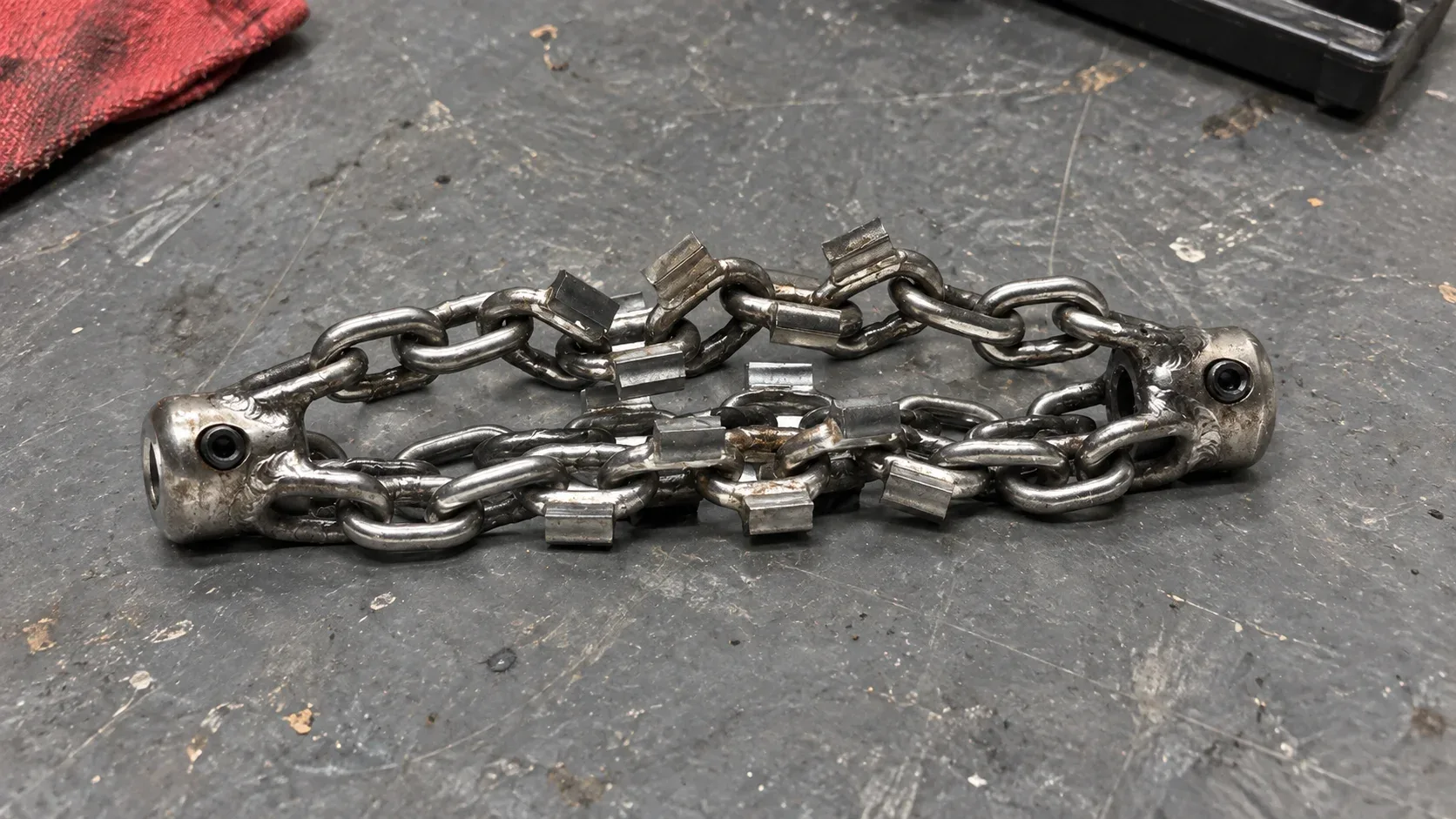
AI-created service illustration based on a real reference. A mechanical cleaning-chain attachment used for appropriate pipe descaling and root-cutting work. Not a contractor project photo.
Cast Iron Pipe Descaling in Connecticut
Savy & Sons provides cast iron pipe descaling for commercial properties and municipal infrastructure in Connecticut. Internal scale and corrosion deposits can reduce the usable opening in cast iron drainage pipe. Rough surfaces can catch debris and contribute to slow drainage or repeated restrictions. Descaling removes accumulated material so the pipe can be assessed more clearly and prepared for a repair system where the remaining host is suitable.
Our field approach
We approach cast iron preparation with the remaining pipe condition in mind. Removing deposits can expose defects that were previously concealed, so cleaning and inspection need to work together. If a coating or liner is proposed, its preparation requirements must be included from the outset. For occupied buildings, access to branches and stacks and coordination of drainage restrictions help determine how that preparation can be carried out.
Conditions that affect the repair
Removing corrosion deposits cannot restore missing metal or correct a failed connection. Thin-wall sections, cracks, or holes may become visible after preparation. Those findings may change a lining scope or identify locations that need replacement before rehabilitation proceeds.
Connecticut project planning
For a Connecticut commercial property, start with the building or utility asset that needs attention. An occupied campus may need staged access and a defined drainage shutdown, while a municipal asset may have an owner specification and a separate inspection requirement. Include those constraints with the site location so the proposed work fits how the property operates.
At Savy & Sons, we bring infrastructure restoration, pipe rehabilitation, protective coatings, and water-intrusion work into a coordinated field scope. We are a family-owned business, and we work with property managers, municipalities, and facility teams to address deteriorating assets. We consider preparation, repair, and return-to-service requirements together so you can plan the work around your operations.
Is descaling a repair for corroded cast iron?
Descaling is a preparation and maintenance step. It removes deposits but does not replace lost wall material. Inspection after preparation establishes whether further repair is appropriate.
Send Savy & Sons your project details
Provide the building use, approximate pipe age and diameter if known, affected floors or branches, existing inspection footage, and the access or shutdown limitations. Include the town, site access, and whether the work affects a building connection or a public collection asset.
Use the “I need this service” or “Request a quote” control on this page to start a direct request to Savy & Sons. If you prefer to speak with us, call (860) 615-2735. The project scope, timing, and method depend on your site and the findings from review.
Related services
View the Savy & Sons Connecticut profile for company information, photos, and contact options.