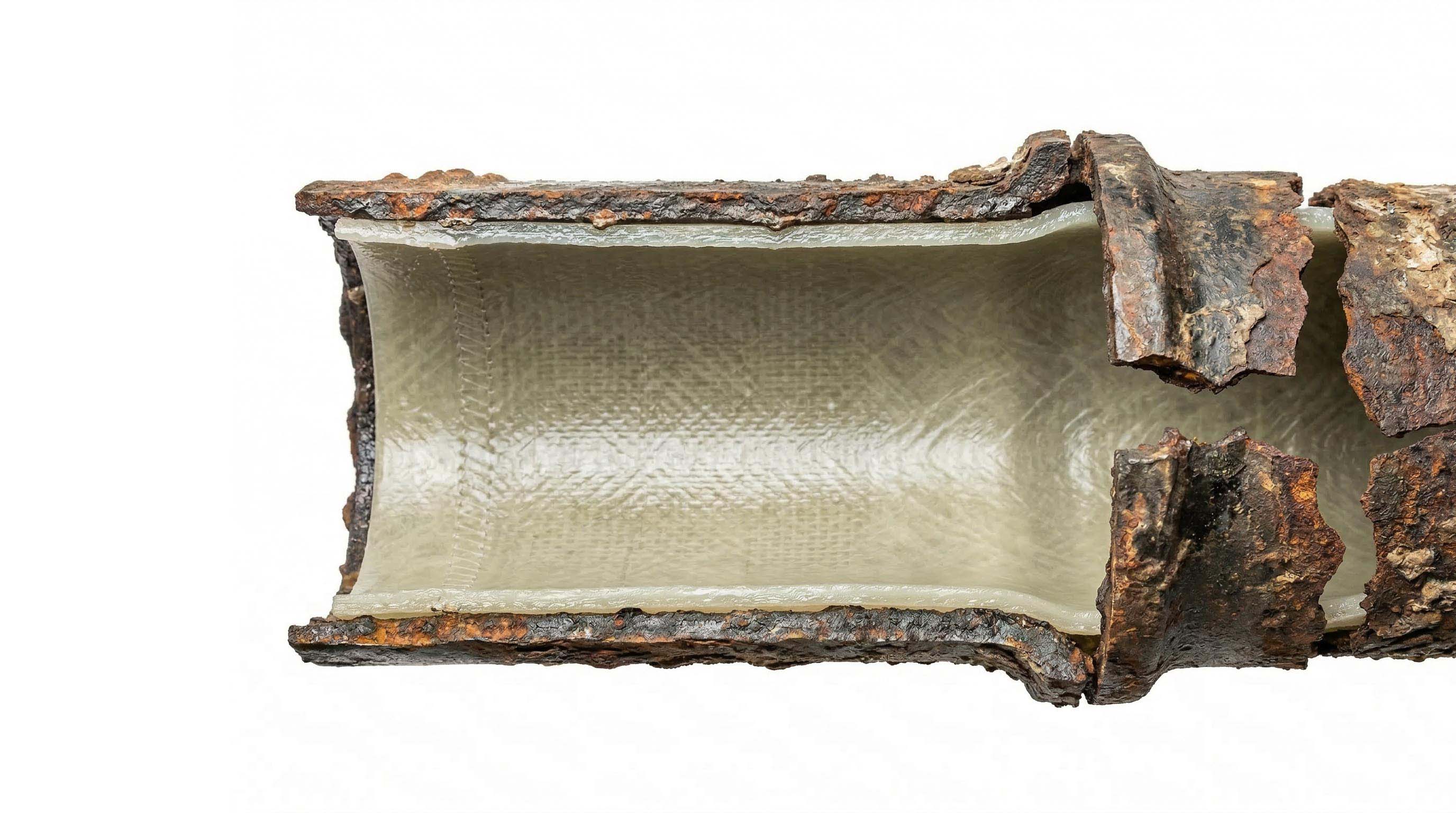
Trenchless Sewer Repair Due Diligence
How Trenchless Sewer Repair Works
This article is a general educational summary only. Property owners, managers, contractors, engineers, buyers, sellers, insurers, and public agencies should perform their own independent due diligence, review the actual inspection footage and site conditions, consult qualified licensed professionals where required, and confirm all repair methods, codes, permits, utility conflicts, warranties, and engineering requirements before making decisions.
Important: No sewer repair method should be selected from a sales description alone. The correct repair path depends on pipe material, diameter, access, depth, slope, soil conditions, structural condition, active leaks, service connections, cleanout placement, local code, and whether the existing pipe can safely serve as a host pipe.
What Trenchless Sewer Repair Means
Trenchless sewer repair is a group of repair methods that restore a damaged sewer pipe with limited excavation. Instead of exposing the entire pipe from end to end, the contractor typically works from existing access points such as cleanouts, manholes, building exits, or small excavation pits.
The most common trenchless approach for existing residential and commercial sewer lines is cured-in-place pipe lining, often shortened to CIPP. In that process, a resin-saturated liner is installed inside the existing pipe and cured so it forms a new pipe wall within the old host pipe.
Other trenchless or limited-dig methods may include sectional point repair, pipe bursting, spray-applied coating, mechanical spot repair, robotic cutting, manhole-to-manhole rehabilitation, or combinations of cleaning, lining, and localized excavation. The method must match the defect, not the other way around.
Why the Existing Pipe Still Matters
Trenchless repair is not magic and it is not appropriate for every pipe. Most lining systems depend on the old pipe acting as a host structure during installation. That means the line usually needs a recoverable shape, a usable path, and enough remaining continuity to accept cleaning, measurement, liner insertion, curing, and final inspection.
A pipe with heavy scale, root masses, separated joints, missing bottom, severe belly, major offset, active collapse, or blocked access may need additional preparation, spot excavation, pipe replacement, or a different repair method before lining can be considered.
| Condition | Why It Matters | Typical Next Step |
|---|---|---|
| Cast iron scale or tuberculation | Reduces pipe diameter and can prevent liner contact with the pipe wall. | Mechanical descaling, cleaning, CCTV review, and diameter confirmation. |
| Root intrusion | Roots indicate open joints, cracks, or pathways for infiltration. | Root cutting, cleaning, defect review, and repair planning. |
| Offset joints | Large offsets can restrict liner installation and create hydraulic restrictions. | Camera measurement, contractor review, and possible spot excavation. |
| Pipe belly | A sag holds water and debris. Lining does not usually correct slope. | Determine severity and whether excavation or replacement is required. |
| Partial collapse | The pipe may not provide a usable host structure. | Excavation, pipe bursting evaluation, or replacement may be needed. |
| Active infiltration | Groundwater can affect cleaning, curing, resin performance, and repair quality. | Leak control, bypass planning, grouting, or engineered repair review. |
The Basic Trenchless Repair Sequence
Although every project is different, a proper trenchless sewer repair usually follows a disciplined sequence. The order matters because each step informs the next. A contractor should not jump straight to lining without first understanding what is inside the pipe.
Locate access and document the complaint
The contractor identifies cleanouts, manholes, building exits, fixtures, previous repairs, property constraints, and the symptoms being reported. Slow drains, backups, odors, recurring root stoppages, wet soil, or failed inspections can all point to different causes.
Inspect the pipe with CCTV
A sewer camera is used to evaluate the line from the available access point. The inspection should identify pipe material, approximate length, depth where known, diameter, bends, fittings, transitions, cracks, roots, scale, offsets, bellies, infiltration, and blockages.
Remove the material blocking the pipe wall
Hydro jetting, mechanical cleaning, root cutting, chain knocking, descaling, or robotic cutting may be used depending on pipe material and condition. The goal is not just to open a drain. The goal is to expose the true host pipe so the repair can bond, fit, or cure correctly.
Reinspect after cleaning
The post-cleaning camera pass is often more important than the first inspection. Heavy debris can hide cracks, missing pipe, bad joints, holes, and structural failure. Once the pipe is clean, the contractor can more honestly determine whether lining is appropriate.
Confirm length, diameter, access, and repair limits
The liner or repair system must be sized correctly. The contractor evaluates the distance from access to termination point, connection locations, bends, transitions, pipe diameter, and where the repair should start and stop.
Install the trenchless repair system
For CIPP lining, a resin-saturated liner is inserted into the host pipe, expanded against the interior wall, and cured using the system specified by the installer. Curing may involve ambient cure, hot water, steam, or ultraviolet light depending on the product and application.
Reopen branch connections where applicable
In mainline or multi-connection work, lateral connections may need to be reopened after lining. This is often performed with robotic cutting equipment. The work should be verified by camera so active branches are not blocked.
Camera the finished repair
The final inspection should document the finished pipe, repair limits, visible liner condition, connection openings, flow path, and any remaining conditions outside the repaired section. This documentation is important for owners, buyers, property managers, and future service providers.
CIPP Lining Explained in Plain Terms
CIPP lining creates a new pipe inside the old pipe. The liner is typically made from felt, fiberglass, or another carrier material that is saturated with resin. Once the liner is placed inside the pipe, it is expanded against the host pipe wall and cured until it hardens.
After curing, the new liner becomes a continuous interior pipe wall. It can bridge cracks, seal many joints, reduce root pathways, improve flow over rough or deteriorated areas, and extend the useful life of the pipe when installed under appropriate conditions.
The final result is not simply a coating. A properly installed structural liner is intended to become a hardened pipe within the host pipe. However, the strength, thickness, resin type, design basis, installation method, and warranty terms vary by system and contractor.
| Method | What It Does | Where It May Fit |
|---|---|---|
| CIPP lining | Installs a cured liner inside the existing pipe. | Cracked, leaking, root-damaged, or deteriorated lines with a usable host pipe. |
| Sectional point repair | Repairs a localized defect rather than lining the entire run. | Specific cracks, joint failures, or short damaged areas. |
| Pipe bursting | Breaks the old pipe while pulling in a new pipe behind it. | Lines that need replacement but have a suitable path and access pits. |
| Spray-applied coating | Applies coating material to the pipe interior. | Certain pipe materials and conditions where coating is appropriate. |
| Robotic cutting | Cuts obstructions, protrusions, taps, or liner openings inside the pipe. | Mainline work, commercial facilities, municipal pipes, and reinstatement tasks. |
| Manhole-to-manhole lining | Rehabilitates longer mainline segments between access structures. | Municipal, commercial, industrial, and larger-diameter collection systems. |
What the Contractor Is Looking for on Camera
A sewer camera inspection is not just a video. It is the evidence used to decide whether the pipe can be cleaned, lined, repaired, or must be excavated. The quality of the inspection matters. Poor lighting, dirty water, fogged lenses, fast camera movement, missing footage distance, and unclear narration can all make the repair recommendation less reliable.
Pipe Material
Cast iron, clay, concrete, PVC, Orangeburg, ABS, and vitrified clay all behave differently. Cleaning aggression, liner selection, and repair planning should account for the host material.
Structural Shape
The contractor needs to know whether the pipe is round, ovalized, fractured, missing sections, or collapsing. A liner cannot correct every structural geometry problem.
Hydraulic Path
Slope, bellies, deposits, standing water, and transitions affect flow. A smooth liner can improve interior roughness, but it does not usually regrade a sagging pipe.
Access Points
Cleanouts, manholes, pits, and building access determine how equipment can be staged and whether a liner can be inserted, inflated, cured, and inspected.
Connections
Branches, laterals, tie-ins, roof drains, floor drains, and commercial fixtures must be identified so active connections are not accidentally blocked.
Risk Conditions
Groundwater, heavy roots, gas, confined spaces, occupied buildings, healthcare facilities, schools, restaurants, and industrial sites may require additional controls.
Cleaning Is Part of the Repair, Not an Optional Add-On
Many failed sewer repair decisions begin with an incomplete cleaning process. A pipe may appear to have a simple blockage when the real issue is scale, corrosion, a separated joint, a crack, or a collapsing section hidden behind debris.
For trenchless work, cleaning must be appropriate for the pipe. Aggressive chain knocking may be useful for heavy cast iron scale, but fragile pipe may require a more controlled approach. Hydro jetting may clear soft blockage and grease, but it may not remove hard tuberculation by itself. Root cutting may restore temporary flow, but roots usually return if the defect is not repaired.
| Task | Purpose | Risk if Skipped |
|---|---|---|
| Hydro jetting | Removes grease, soft debris, sediment, and loose buildup. | Debris can become trapped under the liner or hide defects. |
| Root removal | Clears root masses and exposes the defect that allowed entry. | The pipe may remain obstructed or improperly evaluated. |
| Descaling | Restores bore size in rough cast iron or heavily scaled pipe. | The liner may not fit correctly or may reduce flow too much. |
| Robotic cutting | Removes protruding taps, failed liners, deposits, or internal obstructions. | The liner can snag, wrinkle, bridge, or fail to reach the target area. |
| Pre-lining CCTV | Confirms the pipe is ready for repair. | The crew may install over unknown or unacceptable conditions. |
| Bypass or flow control | Controls active use of the pipe during repair. | Water flow may interfere with installation, curing, or safety. |
When Trenchless Repair Can Be a Strong Option
Trenchless repair can be especially valuable where excavation would be disruptive, expensive, slow, or risky. Driveways, finished floors, landscaping, sidewalks, parking lots, roadways, occupied commercial buildings, hospitals, schools, apartment buildings, and industrial sites can all benefit from reducing open-cut excavation when conditions allow.
Homes
Useful for sewer lines under slabs, driveways, mature landscaping, patios, or finished interior spaces when the pipe condition supports lining.
Commercial Buildings
Can reduce downtime in restaurants, offices, retail centers, warehouses, medical offices, and multifamily properties.
Municipal Systems
Often used for mainline rehabilitation, manhole-to-manhole lining, infiltration reduction, and asset management programs.
Property Transactions
Can help buyers and sellers address sewer defects when supported by inspection footage, scope clarity, and proper documentation.
When Trenchless Repair May Not Be the Right Fit
A responsible contractor should be willing to say when lining is not the right answer. If the pipe has lost alignment, collapsed, flattened, backpitched, separated badly, or cannot be accessed safely, excavation or replacement may be more appropriate.
Some defects can be repaired trenchlessly only after a localized dig. Others may require conventional replacement. A limited excavation is not a failure of trenchless planning. Sometimes it is the correct way to create access, remove a collapse, expose a transition, or protect the larger project from a poor installation.
| Issue | Trenchless Repair | Open-Cut Replacement |
|---|---|---|
| Surface disruption | Usually lower because the full pipe path is not excavated. | Usually higher because the pipe must be exposed. |
| Pipe alignment | Generally follows the existing pipe path and slope. | Can correct grade, alignment, and elevation when properly installed. |
| Collapsed sections | May require spot excavation before trenchless work can continue. | Often appropriate when the pipe cannot act as a host structure. |
| Finished surfaces | May help avoid cutting floors, slabs, driveways, or landscaping. | May require demolition, restoration, and extended site disturbance. |
| Documentation | Should include pre-cleaning, post-cleaning, and post-repair CCTV. | Should include photos, pipe material details, bedding, slope, and final testing where applicable. |
What Good Documentation Should Include
Good trenchless work should leave a paper trail and a video trail. This matters for property owners, real estate transactions, commercial facility managers, insurance conversations, future maintenance, and warranty questions.
Pre-Repair Footage
Shows the original condition of the pipe before major work begins. This footage helps establish the defect, location, and repair justification.
Cleaning Evidence
Shows whether roots, scale, grease, debris, or obstructions were removed before the repair system was installed.
Repair Scope
Identifies the start point, stop point, pipe size, material, access location, and whether the work is sectional or full-length.
Product and Warranty Terms
Should identify what was installed, who installed it, what is covered, what is excluded, and what maintenance requirements apply.
Post-Repair Footage
Shows the finished condition and allows the owner to confirm that the repaired section is open and visible.
Remaining Conditions
Identifies defects outside the repair zone so the owner does not assume the entire system was rehabilitated if only one section was repaired.
Questions to Ask Before Hiring a Trenchless Sewer Contractor
Before approving trenchless sewer repair, ask direct questions. The answers should be specific to your pipe, not generic marketing language.
What exact section of pipe is being repaired?
Confirm the starting point, ending point, length, access point, and whether the proposal covers the full sewer line or only a limited section.
Why is this pipe suitable for trenchless repair?
Ask the contractor to explain the host pipe condition, visible defects, cleaning plan, and any risks that could change the scope.
What repair system is being used?
Ask whether the work involves CIPP lining, sectional repair, pipe bursting, coating, robotic cutting, or another method. Confirm the material, cure process, and warranty language.
Will I receive final camera footage?
Post-repair documentation should be part of the closeout package. A finished repair should not rely only on a verbal statement that the line is fixed.
Due diligence reminder: If the sewer line is part of a home purchase, commercial acquisition, insurance discussion, municipal project, or legal dispute, do not rely on a short verbal summary. Obtain the inspection video, written scope, exclusions, warranty terms, contractor credentials, permit requirements, and any engineering review needed for the property.
How Lining Pro Helps With the Search Process
Lining Pro is built around sewer repair, trenchless rehabilitation, pipe lining, inspection, cleaning, and related underground utility services. The goal is to help property owners and project stakeholders find contractors whose listed services match the type of sewer problem they are researching.
A directory profile is not a substitute for contractor due diligence. It is a starting point. Owners should still review the contractor’s license where applicable, insurance, references, project experience, inspection process, warranty terms, and the specific repair recommendation for the pipe in question.
Find Sewer Repair Contractors
Use Lining Pro to start your search for sewer repair, trenchless lining, CCTV inspection, pipe cleaning, and related sewer rehabilitation contractors.
Browse sewer repair contractors or view contractor resources.