
Lining & Coating Solutions
Call Us Before You Dig! One Call Can Save You Thousands!
Each item below is self-reported by the profile owner and not verified by LiningPro.
Featured video
Where they service
Full Florida coverage
Statewide service across 20 listed communities
This listing covers Florida's Gulf Coast. Share the property location and access requirements when requesting service so our team can confirm the project scope and schedule.
Service capabilities
Reference imagery and methodology notes from the LiningPro library. Open a card for the full brief
Each item below is self-reported by the profile owner and not verified by LiningPro.
About Lining & Coating Solutions
At Lining & Coating Solutions, we provide trenchless pipe rehabilitation for Florida properties, including the Gulf Coast. Our work includes sewer and drain lining, pipe coating, camera inspection, storm-drain rehabilitation and UV lateral spot repair. We assess the existing pipe, prepare the line and select an installation approach suited to its condition and available access. Internal rehabilitation can reduce excavation for a suitable pipe, while collapse, severe displacement or other unsuitable conditions may require a different repair. Tell us where the property is located, which line is affected and what inspection or repair work has already been completed. Include access to the cleanout and any restrictions on using the drainage system during the work. Call 888-345-5112 or use the request form on this profile. Include the property location, symptoms, existing inspection findings and any access restrictions. You do not need to choose a repair method before contacting us.
Lining & Coating Solutions: Technical Overview of Trenchless Pipe Rehabilitation Services
Lining & Coating Solutions provides trenchless pipe repair, pipe lining, pipe coating, sewer rehabilitation, drain rehabilitation, storm drain repair, manhole coating, tank lining, sewer camera inspection, robotic cutting, and UV lateral spot repair services for residential, commercial, industrial, and municipal pipe systems. The company’s work is built around one core principle: many failing underground pipes can be rehabilitated from the inside without open-cut excavation, major demolition, long utility shutdowns, or unnecessary property restoration. Instead of removing the entire host pipe, LCS uses inspection, cleaning, lining, coating, curing, cutting, and reinstatement methods to restore flow, seal defects, reduce infiltration, control corrosion, and extend the useful life of existing pipe infrastructure.
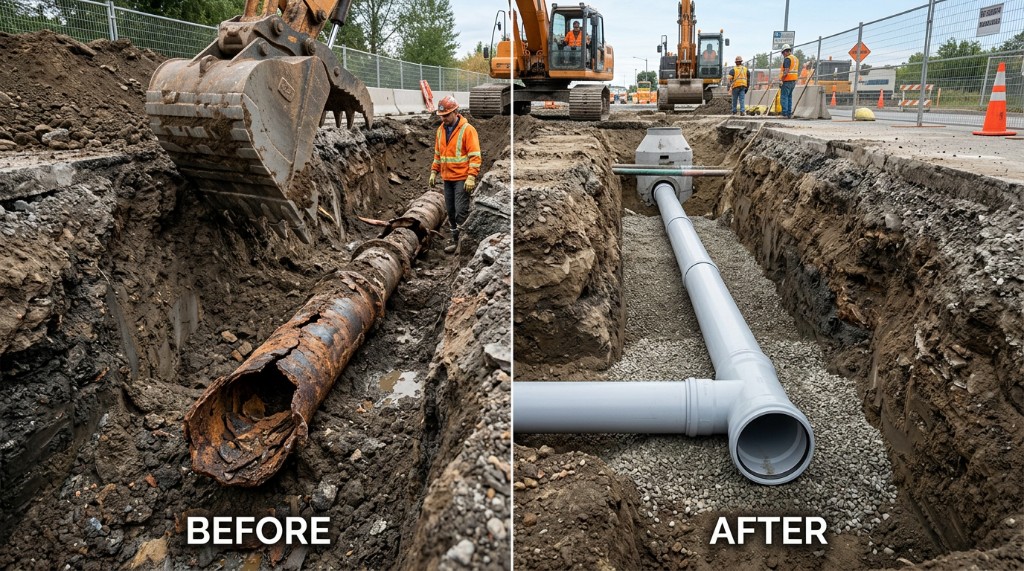
The service model is especially valuable for properties where excavation creates high secondary costs. A failed sewer line beneath a parking lot, production floor, commercial kitchen, apartment complex, landscaped property, roadway, sidewalk, hospital, school, industrial yard, or municipal right-of-way can create much more than a plumbing problem. It can interrupt operations, create health and sanitation concerns, expose a property owner to water damage, disrupt tenants or customers, and require expensive surface restoration after the pipe is repaired. Trenchless rehabilitation reduces those risks by using existing access points whenever possible, such as cleanouts, manholes, catch basins, sewer access structures, or small controlled entry points.
Core Pipe Rehabilitation Approach
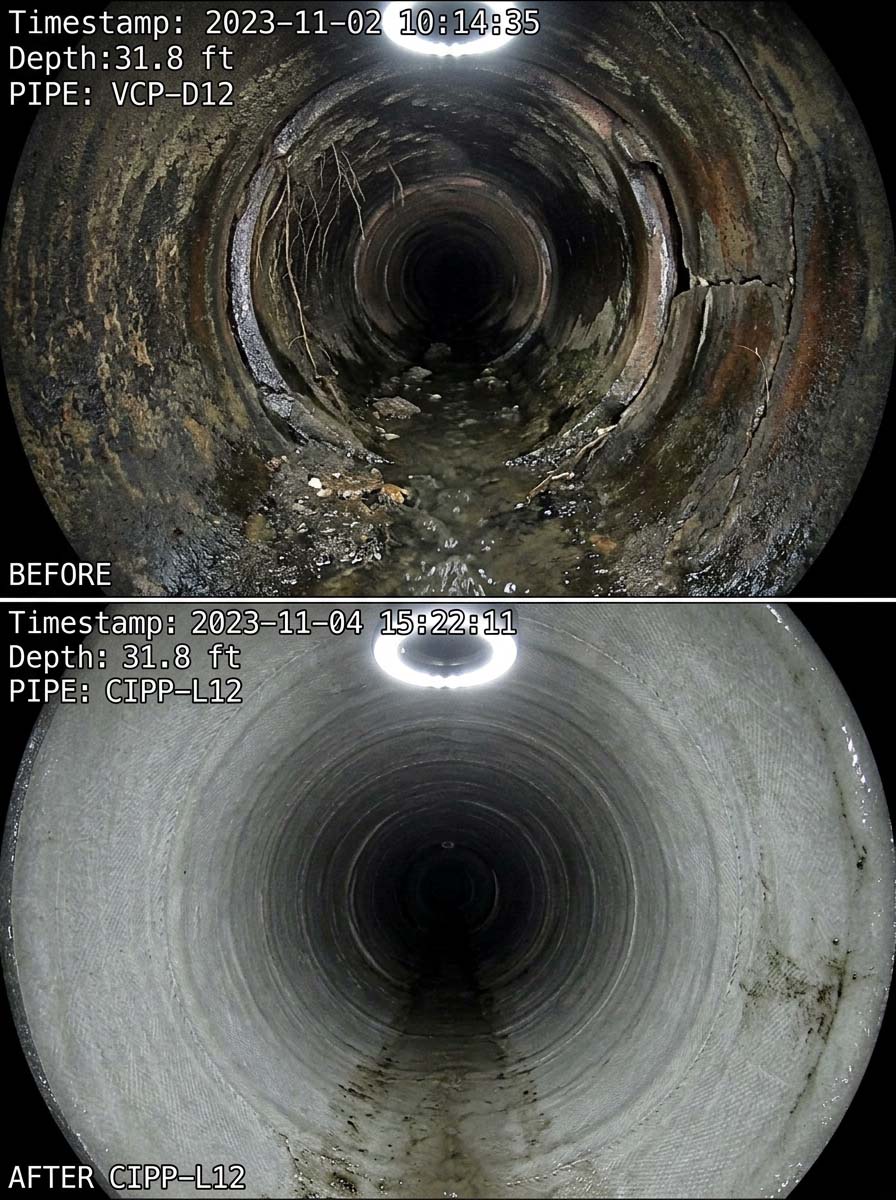
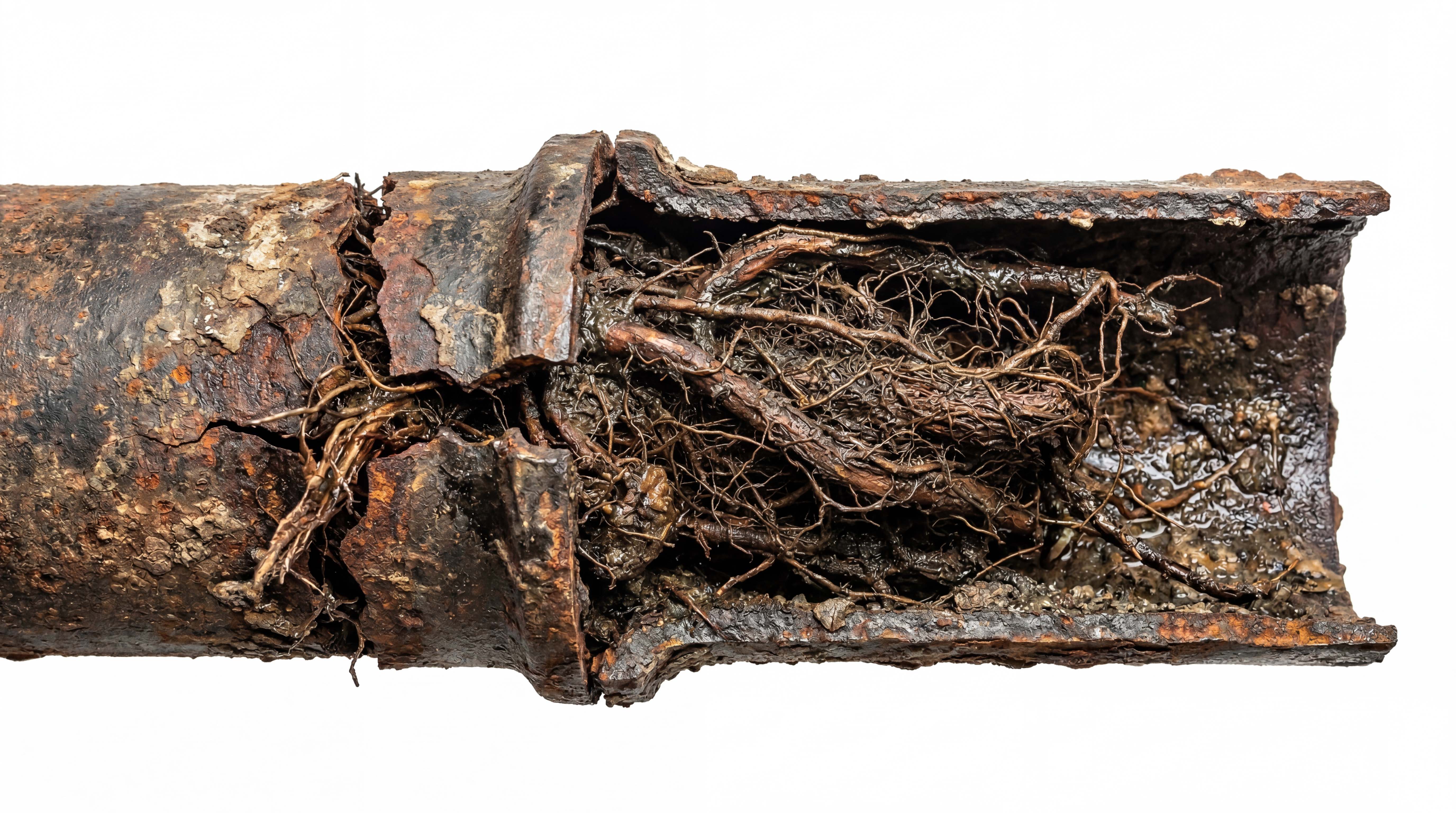
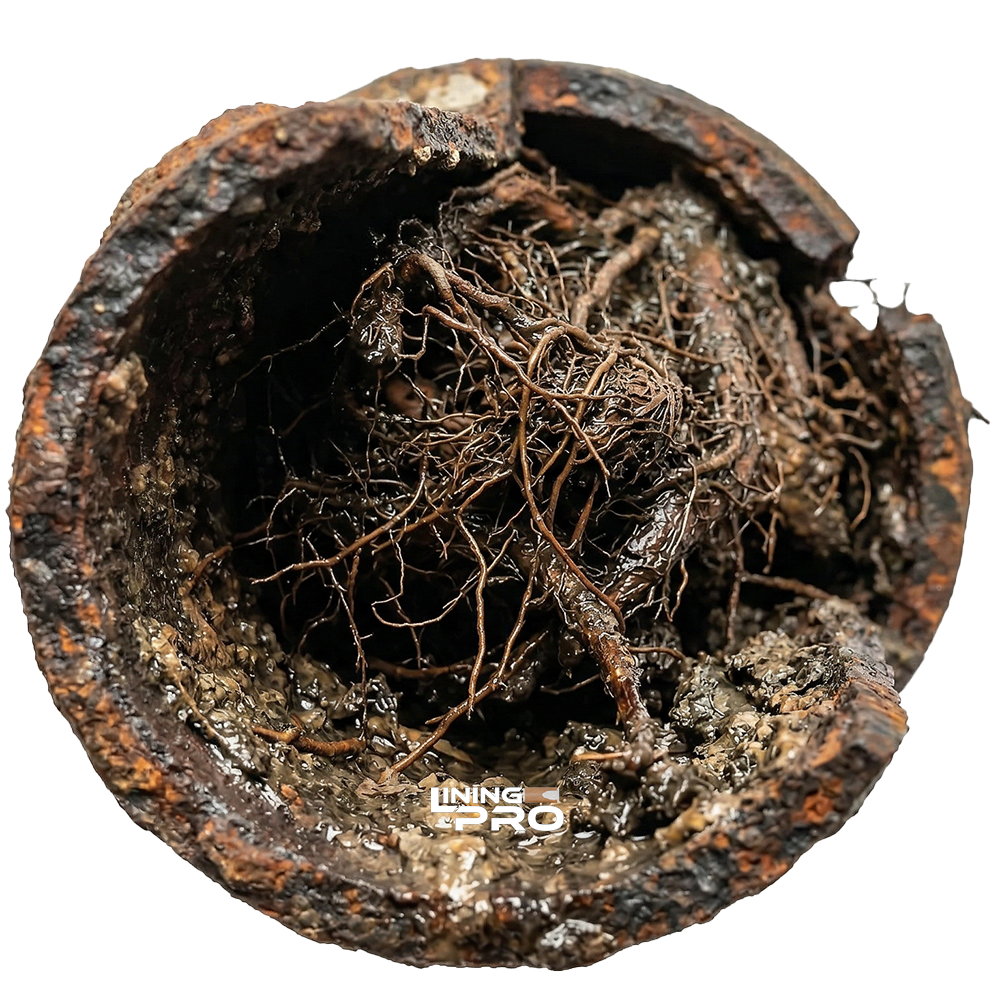
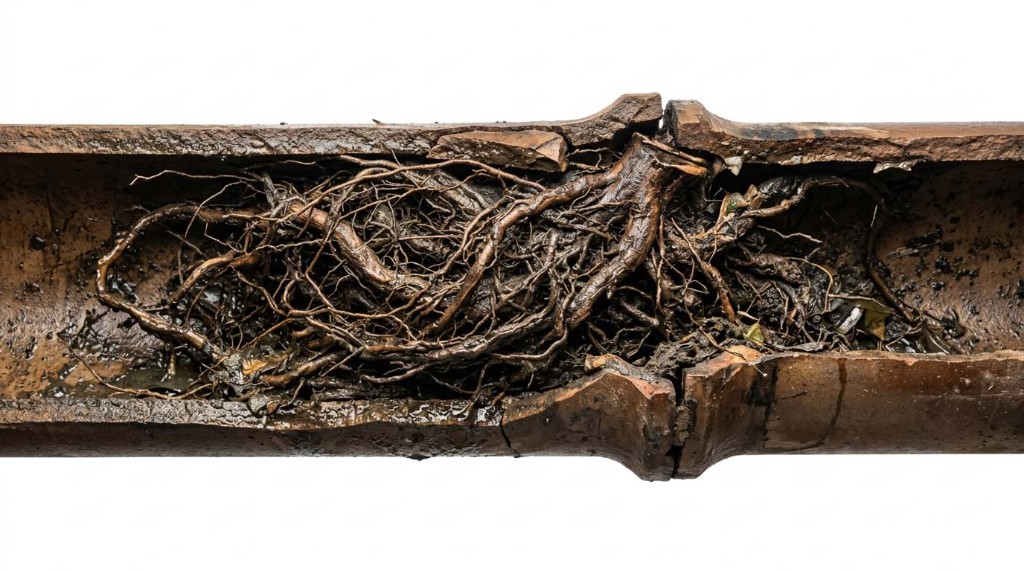
The typical LCS workflow begins with assessment. A sewer camera inspection or mainline camera inspection allows technicians to visually evaluate the interior condition of the pipe before recommending a repair method. This inspection can identify defects such as cracks, separated joints, root intrusion, corrosion, missing pipe wall, offsets, scale buildup, grease accumulation, bellies, infiltration points, failed connections, and structural deterioration. On commercial, industrial, and municipal systems, this diagnostic step is critical because the wrong repair recommendation can create unnecessary downtime and cost. A camera inspection helps determine whether the pipe can support a liner, whether coating is more appropriate, whether a spot repair is enough, whether cleaning is required, or whether a localized section is too compromised for lining.
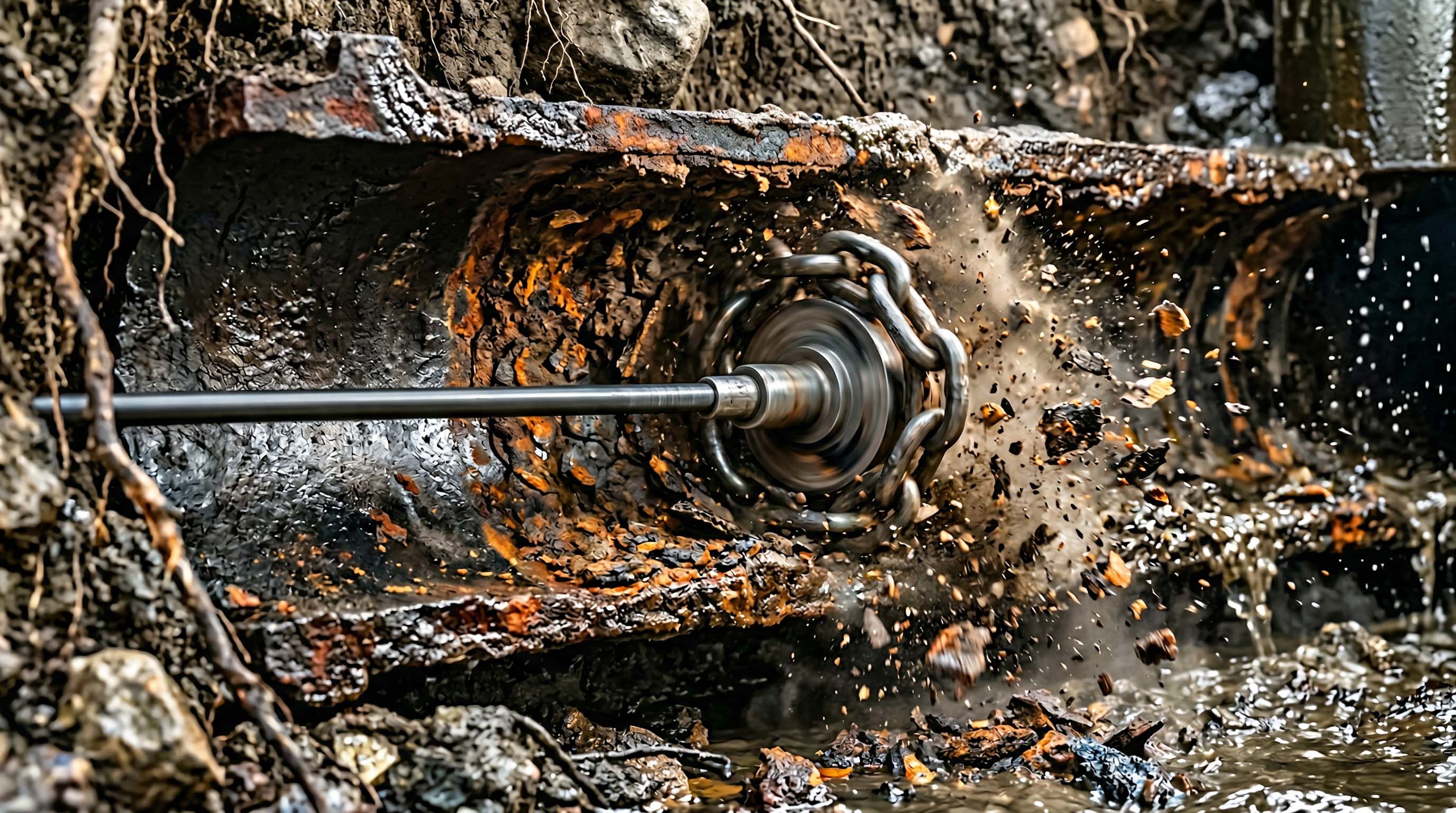
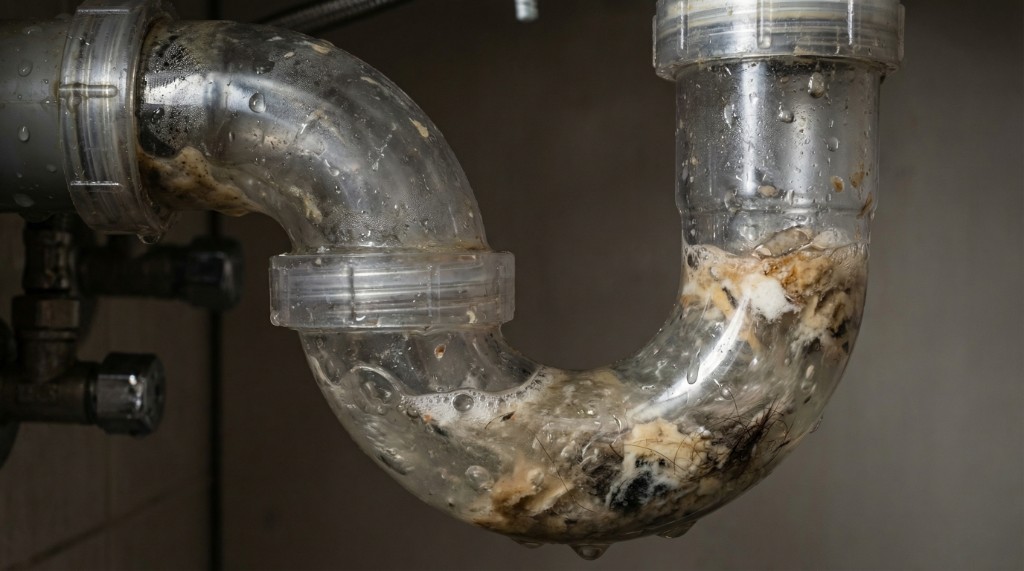
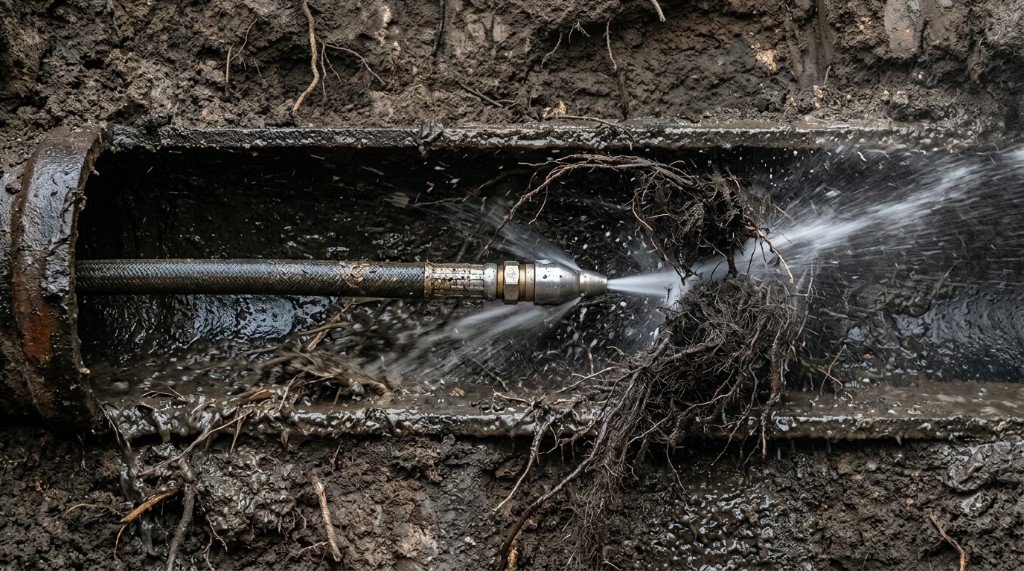
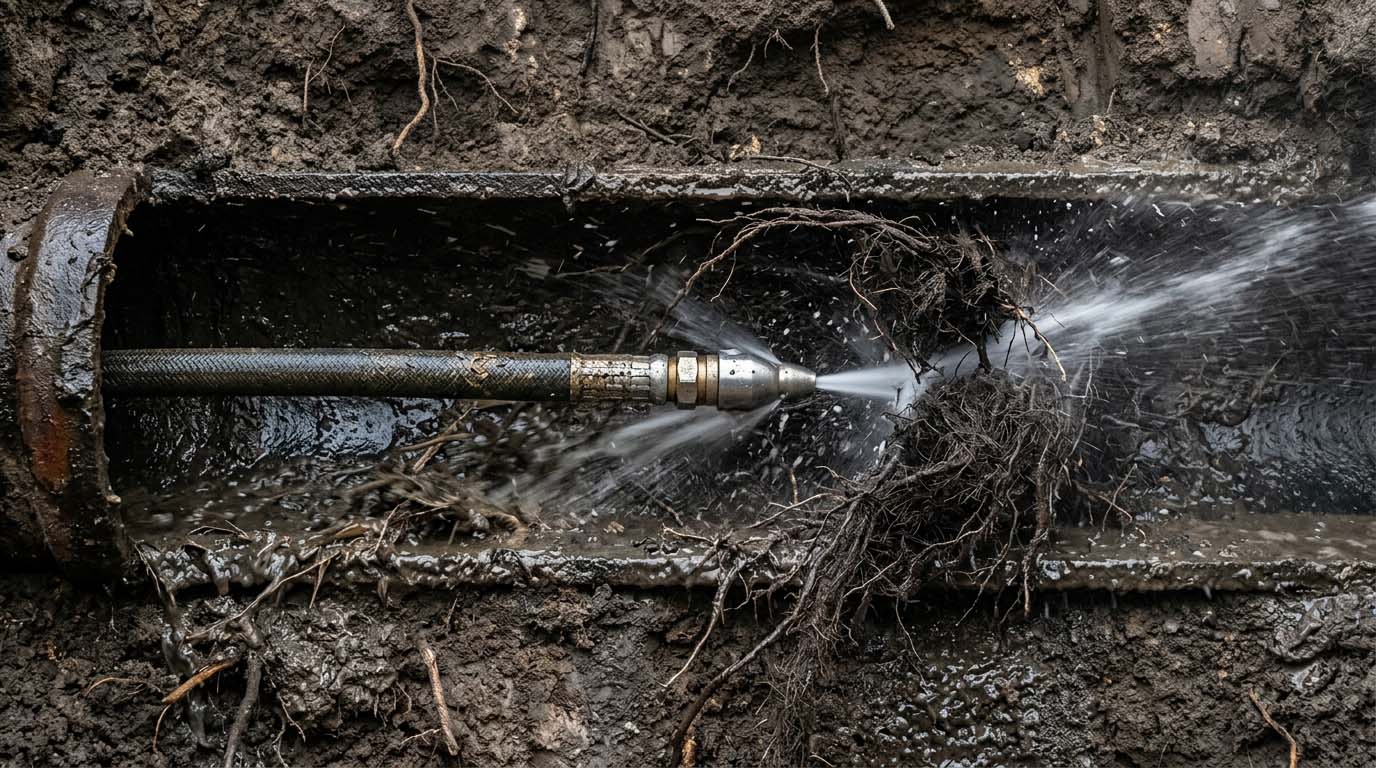
After inspection, the pipe is typically cleaned and prepared. Cleaning may include hydro jetting, mechanical cleaning, descaling, debris removal, grease removal, root removal, or surface preparation depending on the pipe material and the selected repair method. Surface preparation matters because cured-in-place pipe liners and epoxy coatings need proper contact with the host pipe. Loose debris, heavy deposits, corrosion scale, grease, and standing obstructions can interfere with adhesion, curing, liner placement, and final hydraulic performance. For coating applications, preparation may include more aggressive cleaning or surface profiling so the coating system can bond properly to the substrate.
Trenchless Underground Pipe Lining
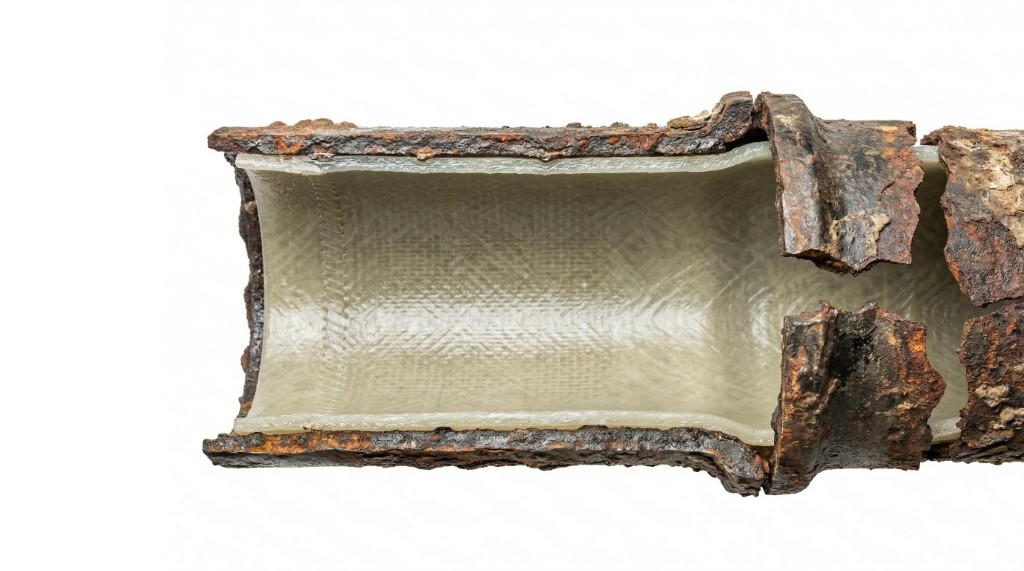
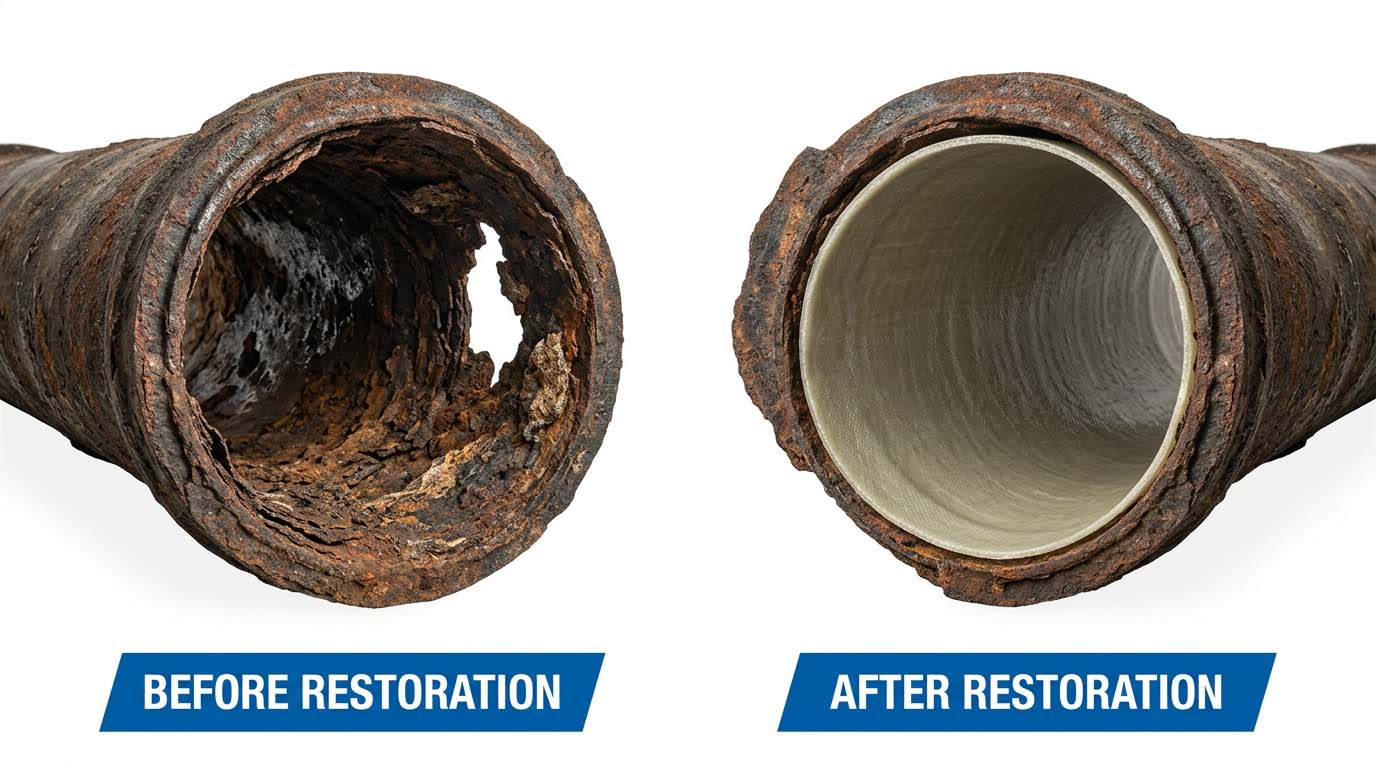
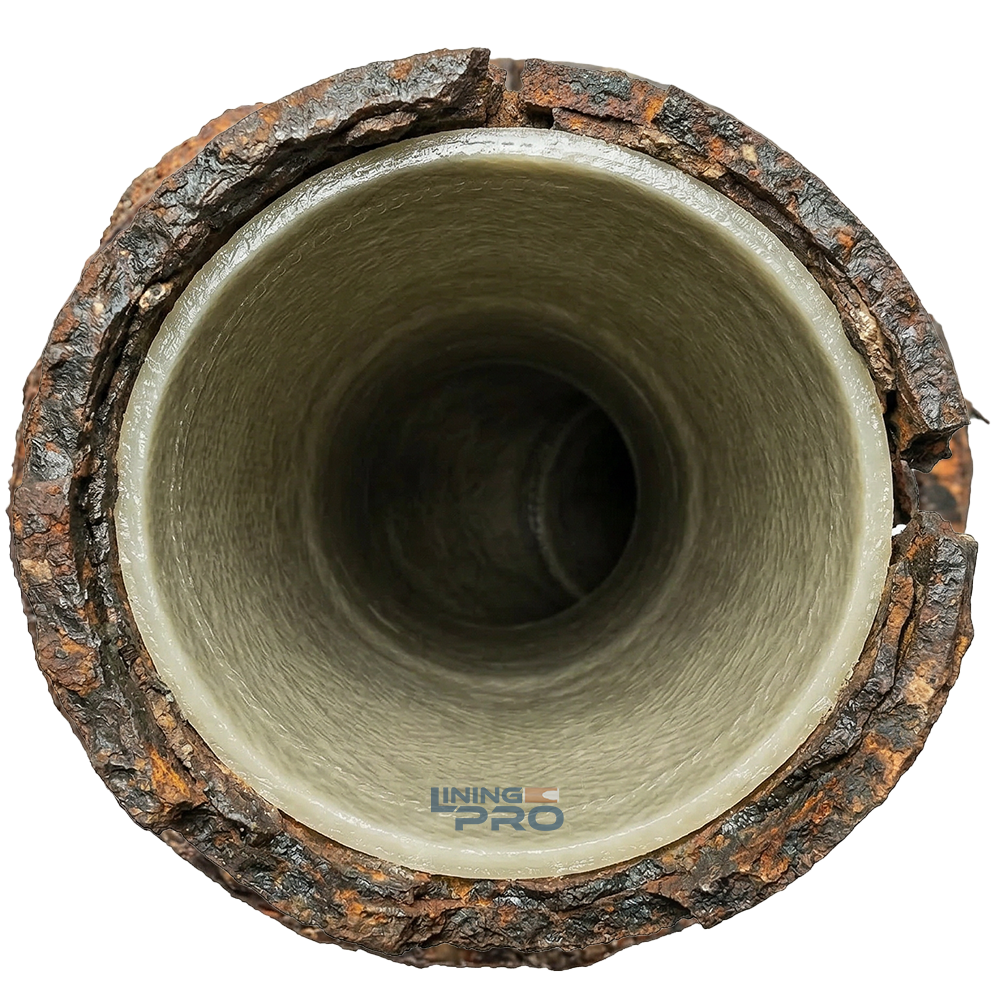
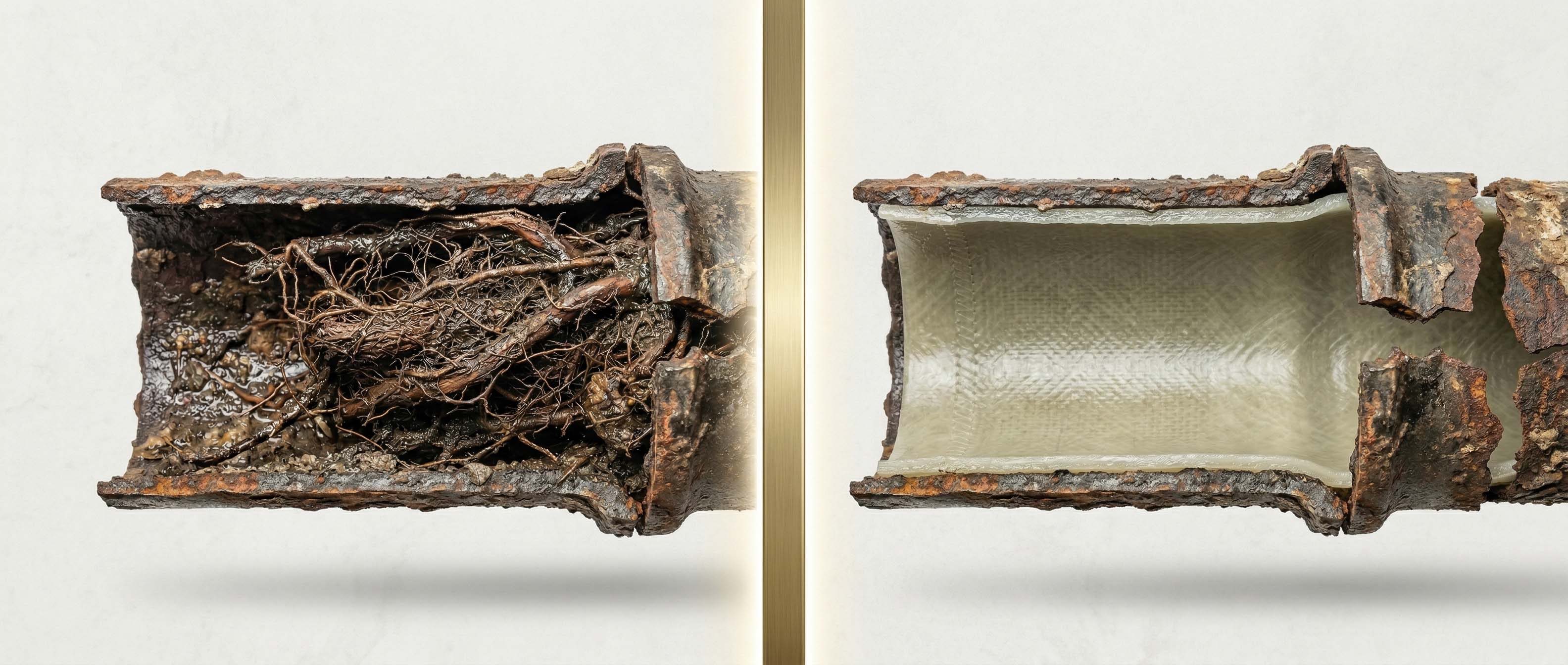
Trenchless underground pipe lining is one of the primary services offered by LCS. This method is used when an existing underground sewer, drain, storm, or process pipe has enough remaining structure to act as a host for a new internal liner. A resin-saturated liner is inserted into the existing pipe, positioned across the damaged section, expanded against the pipe wall, and cured to create a new pipe within the old pipe. Once cured, the liner bridges cracks, seals joints, improves flow characteristics, and protects the pipe from future corrosion and root intrusion.
This process is well suited for long pipe runs, hard-to-access pipe, pipes beneath finished surfaces, and infrastructure where excavation would be disruptive. LCS describes trenchless underground lining as a way to repair pipelines without digging trenches or tearing down walls to access the pipe. The method can be used across residential, commercial, industrial, and municipal settings, including service laterals, building drains, sewer mains, storm drains, and other buried drainage systems.
Continuous Pipe Lining
Continuous pipe lining is used when longer runs of pipe need rehabilitation rather than a single isolated spot repair. The value of continuous lining is that hundreds of linear feet of pipe may be addressed with minimal surface disturbance. For commercial buildings, industrial facilities, apartment complexes, institutional campuses, and municipal systems, this can prevent long closures, large excavation zones, and repeated mobilization for multiple repairs. The liner is pulled or installed through the affected pipe, placed into proper position, expanded, and cured to form a continuous internal pipe surface.
Continuous lining is especially important where the pipe has widespread deterioration, recurring root intrusion, multiple leaking joints, corrosion throughout the run, or aging pipe material that is still structurally suitable for rehabilitation. The finished liner provides a smooth internal wall, improves hydraulic performance, reduces roughness, seals defects, and can extend pipe service life without removing the original pipe. This is one of the most practical solutions when a system has chronic problems but does not justify full replacement through open excavation.
Sewer Lining and Trenchless Sewer Pipe Repair
Sewer lining is used to rehabilitate sanitary sewer pipes that are cracked, leaking, corroded, offset, root-damaged, or otherwise failing. The process generally starts with camera inspection, followed by pipe cleaning, liner installation, curing, and final inspection. The objective is to create a structural or semi-structural internal pipe that restores function while avoiding the damage and restoration costs associated with excavation.
For commercial and industrial sewer systems, speed matters. A sewer failure can affect restrooms, kitchens, production areas, tenant spaces, mechanical rooms, public access areas, or entire facilities. LCS positions sewer lining as a faster and more efficient alternative to traditional sewer replacement, with the ability to place new pipe material inside existing infrastructure and return service quickly. For property owners, this can reduce business interruption, protect occupied spaces, preserve pavement and landscaping, and limit exposure to sanitation problems.
Drain Lining
Drain lining focuses on drainage systems serving buildings, facilities, stormwater structures, and wastewater conveyance. This can include interior building drains, exterior drains, roof drain leaders, area drains, commercial drain systems, and other drainage infrastructure where excavation or demolition would be difficult. The process is similar to sewer lining: inspect the line, clean the pipe, place the liner, expand it, cure it, and verify the result.
Drain lining is a strong option for commercial properties where a failing drain can disrupt customer access, employee productivity, restrooms, kitchens, parking areas, loading zones, or maintenance areas. A thin cured-in-place liner can restore the internal wall of the pipe while preserving capacity. When properly selected and installed, drain lining can reduce infiltration, limit exfiltration, smooth rough pipe interiors, and protect the pipe from recurring corrosion and root-related failures.
Pipe Coating
Pipe coating is different from full pipe lining. Instead of installing a cured liner, coating applies a protective epoxy or coating system to the interior of the pipe, manhole, tank, or structure. LCS references the use of high-performance epoxy protective coating systems for wastewater-contact environments. Coating is often used when the structure needs corrosion protection, leak sealing, surface restoration, or chemical resistance, but where a full liner may not be the preferred method.
Pipe coating can be used in commercial, industrial, and municipal environments where corrosion, wastewater gases, chemical exposure, abrasion, moisture, or surface degradation threaten the service life of the structure. The process usually requires inspection, cleaning, surface preparation, and controlled application. On industrial projects, coating selection must consider the substrate, exposure conditions, temperature, flow, chemical environment, downtime window, and required cure profile.
Manhole and Tank Lining
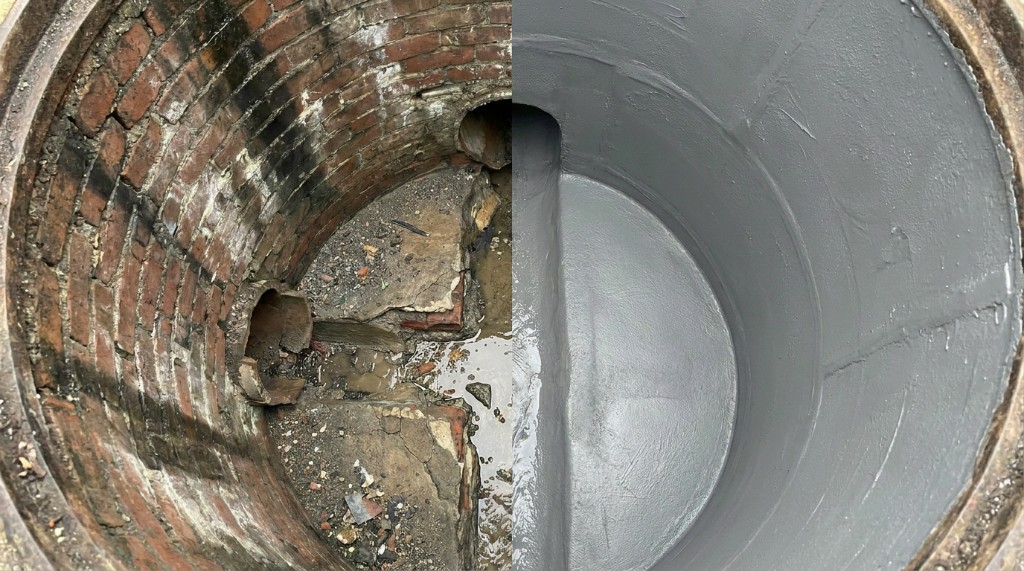
Manhole and tank lining services are designed for structures exposed to wastewater, moisture, hydrogen sulfide environments, corrosion, abrasion, and repeated inflow. Manholes and tanks are common failure points because they experience harsh service conditions, turbulent flow, gas exposure, infiltration, and structural wear. LCS provides manhole spraying and coating services using commercial-grade plural-component spraying equipment and protective coating systems.
For municipalities, industrial facilities, and commercial properties, manhole rehabilitation can reduce infiltration, protect concrete or masonry surfaces, improve structural integrity, reduce corrosion, and extend asset life. Tank lining can serve similar goals in wastewater, process, and containment applications. Proper preparation is essential. Surfaces may need cleaning, profiling, defect repair, moisture control, and primer or base coat application before the final protective lining or coating is installed.
Mainline Camera Pipe Inspections
Mainline camera inspections are a technical foundation for most trenchless repair decisions. LCS uses camera inspection to evaluate the condition of pipes from the inside and determine the most appropriate repair method. Inspection footage can reveal whether the pipe is a candidate for CIPP lining, coating, cleaning, spot repair, cutting, reinstatement, or selective replacement. For commercial and municipal assets, this also creates documentation that can support maintenance planning and budget decisions.
A proper camera inspection can identify defect type, defect location, severity, pipe material, pipe diameter, access limitations, active infiltration, obstructions, sags, joint separation, root intrusion, and connection locations. This prevents guessing. It also gives the property owner or facility manager a clearer understanding of why the repair is needed and what method is most appropriate.
Reinstatement Cutters and Remote Pipe Cutting
After a liner is installed, lateral connections, branch openings, taps, and service connections may need to be reopened. This is where reinstatement cutters are used. LCS provides remote pipe cutting and lateral reinstatement services using specialized cutting equipment that can be inserted into the pipe and controlled from an access point. This allows technicians to reopen connections after lining and remove certain internal obstructions without excavating the pipe.
Reinstatement is critical on sewer mains, storm drains, commercial drain systems, and lined pipes with multiple connected branches. Without accurate reinstatement, connected fixtures, laterals, inlets, or drains may remain blocked. Robotic or air-driven cutting systems allow controlled cutting inside the pipe, helping complete the trenchless repair without surface demolition.
Storm Drain Pipe Repair
Storm drain pipe repair is another major service category. Failing storm drains can cause flooding, pavement settlement, sinkholes, erosion, water damage, and structural problems around roads, parking lots, sidewalks, buildings, and municipal drainage systems. Storm drains often fail from corrosion, separated joints, pipe wall loss, soil movement, root intrusion, abrasion, and age. Traditional storm drain replacement can require excavation through paved areas, landscaped areas, traffic zones, or public access routes.
LCS uses trenchless storm drain repair methods to rebuild the pipe internally. A resin-based liner or sleeve can be placed inside the existing storm drain and cured to form a new internal pipe surface. For complex storm systems with multiple inlets or outlets, reinstatement tools can reopen connections after lining. This is important for commercial properties, mobile home parks, municipal drainage networks, industrial yards, and large paved sites where stormwater performance is essential.
UV Lateral Spot Repair
LCS also offers UV sewer lateral spot repair using LightRay technology. UV spot repair is designed for targeted defects where a full-length liner may not be necessary. A fiberglass liner impregnated with UV-curable resin is placed at the damaged section, then cured with ultraviolet light. This allows a localized repair to be completed quickly, often with less odor, less mess, and shorter cure times than some traditional ambient-cure methods.
UV spot repair is useful for cracks, small breaks, localized deterioration, leaking joints, and specific lateral defects. Because the repair is targeted, it can reduce material use and installation time. It can also be valuable where access is limited or where a fast return to service is needed. The site describes LightRay UV technology for smaller pipe applications and emphasizes rapid curing, pre-impregnated materials, and no-dig repair capability.
Industries and Property Types Served
LCS serves residential, commercial, industrial, and municipal clients. Residential work can include homes, condos, townhomes, duplexes, apartment complexes, high rises, and other occupied housing where sewer or drain repair must be handled with minimal disruption. Commercial work can include hospitals, clinics, malls, shopping centers, grocery stores, restaurants, hotels, schools, universities, daycare centers, government buildings, offices, and service businesses. Industrial work can include warehouses, manufacturing plants, industrial parks, production facilities, new construction sites, mechanical piping environments, and facilities with process-related drain, wastewater, stormwater, or utility piping.
The technical requirement changes by property type. Residential work must protect occupied living areas and minimize disruption. Commercial work must protect customers, tenants, staff, restrooms, kitchens, public access, and operating hours. Industrial work may involve larger pipe, harsher exposure, confined spaces, chemical environments, production downtime, safety requirements, and more complex access conditions. Municipal work requires attention to public infrastructure, stormwater control, sewer performance, long-term asset life, and reduced disruption to roads, sidewalks, and public property.
Service Area
Lining & Coating Solutions operates from a Mississippi headquarters in Olive Branch and a Tampa Bay area office in Clearwater, Florida. The company presents service availability across the Mid-South, Southeast, Florida, and selected Midwest areas. Florida service areas shown on the site include Tampa Bay, Clearwater, Sarasota, St. Petersburg, Largo, Pinellas County, Miami, Lakeland, and Siesta Key. Additional service areas include Atlanta, Georgia; Charleston, South Carolina; Memphis, Tennessee; Lafayette, Louisiana; New Orleans, Louisiana; Little Rock, Arkansas; Northern Kentucky; and Indiana.
The company’s broader regional positioning includes work throughout Tennessee, Arkansas, Louisiana, Florida, Georgia, and South Carolina, with additional location pages and regional service pages supporting pipe lining, sewer lining, camera inspection, storm drain repair, drain lining, and trenchless pipe lining. This regional footprint is important because trenchless pipe rehabilitation often requires specialized crews, equipment, materials, and field experience that many general plumbing providers do not carry in-house.
Why the LCS Service Model Matters
The advantage of LCS is not only the repair material itself. The advantage is the complete trenchless workflow: inspect the pipe, identify the actual failure, clean the host pipe, select the correct rehabilitation method, install the liner or coating, cure the material, reinstate connections where required, and verify the repair. This approach helps property owners avoid unnecessary excavation, protects operational continuity, reduces restoration costs, and extends the useful life of buried or hard-to-access pipe infrastructure.
For property managers, plant managers, municipal administrators, facility directors, homeowners, and commercial owners, LCS provides a technical alternative to the old assumption that every broken sewer, drain, or storm pipe has to be dug up and replaced. When the host pipe is a suitable candidate, trenchless lining, coating, spot repair, and reinstatement can restore service with far less disruption. For failing pipelines across the Southeast, Mid-South, Florida, and supported regional markets, Lining & Coating Solutions offers a specialized pipe rehabilitation platform focused on no-dig repair, structural renewal, corrosion control, fast response, and long-term system performance.
Contact Lining & Coating Solutions to schedule a pipe inspection, request a trenchless repair evaluation, or discuss a sewer, drain, storm drain, manhole, tank, commercial, industrial, residential, or municipal pipe rehabilitation project.
Request help with your pipe or sewer system
Call 888-345-5112 or use the request form on this profile. Include the property location, symptoms, existing inspection findings and any access restrictions. You do not need to choose a repair method before contacting us.
Explore sewer camera inspection and trenchless sewer repair before discussing the condition of your line.